
One-stop comprehensive solution provider
Short answer: Buy the version you can see working on a live video call — a bin that drives to you on a voice, app, or remote summon, opens its lid, and rolls back to its dock — and verify the summon before you order volume. Peer listings in November 2026 put the home range roughly at $9–$60 a unit: sensor-lid cans around $4–$12, auto-bagging models around $17–$40, and the movable robot-bin tier around $59 retail. Ask for the CE/RoHS reports and the UN38.3 battery test if it ships by air, and check the obstacle avoidance on a real living-room floor, not a bare studio. Sea freight for Christmas is already cut off, so this season’s orders go by air.
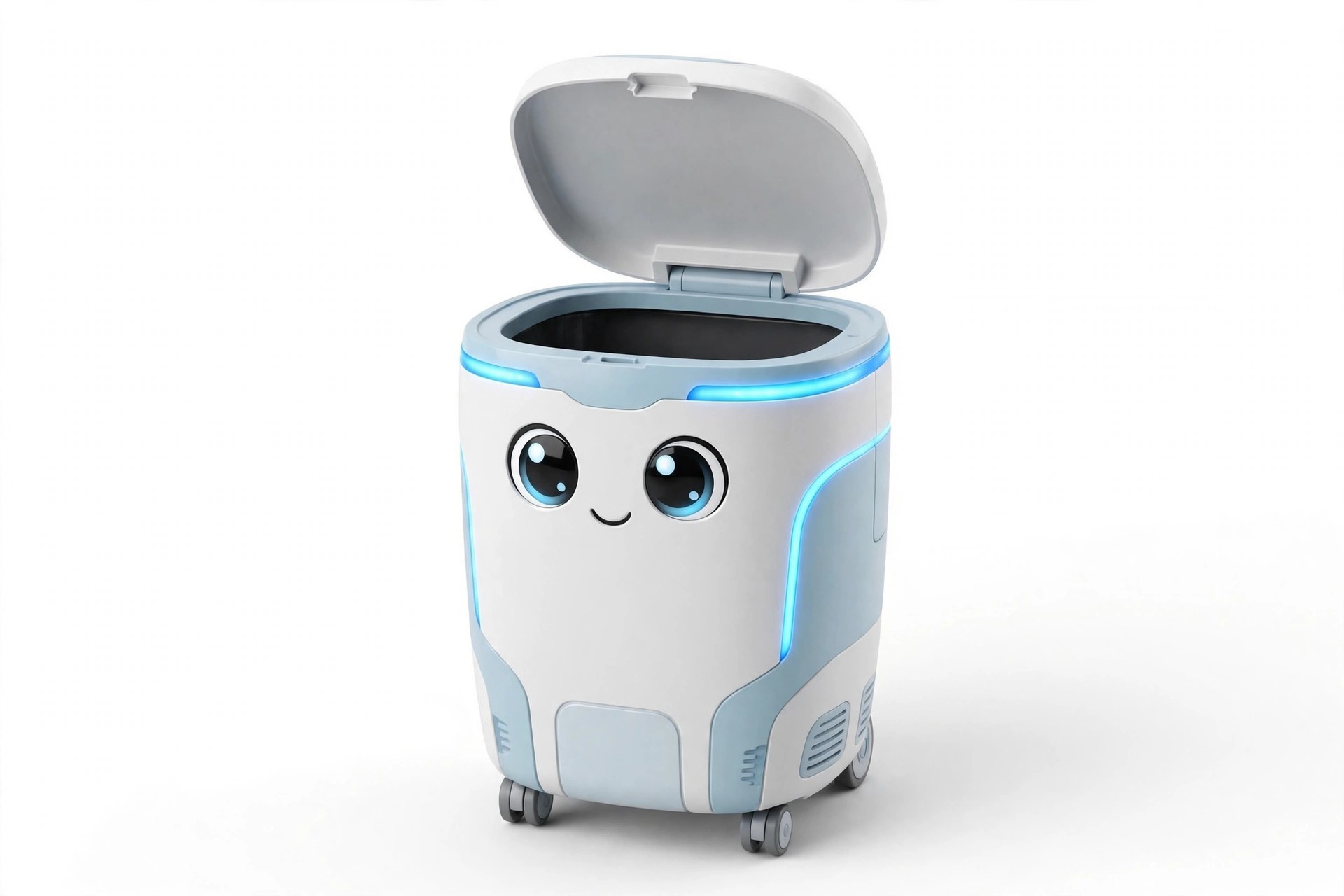
The AI trash can is the novelty product of November 2026. The video everyone is sharing shows a cute dinosaur-style robot bin — white and light blue, big cartoon eyes — rolling out from around a corner when its owner calls it, opening its lid like a mouth, taking a tissue, and driving back down the hallway. The same idea is already working in public in Shenzhen, where a mobile smart bin at Huangmugang Metro Station drives up to pedestrians and asks for their rubbish. And it is not a concept render: Chinese suppliers list sensor-lid smart cans, auto-bagging models, and robot-shaped bins on Alibaba, 1688, and Taobao right now, and brands like Dreame and DUTE sell them at retail. The product looks simple — a bin, a lid, a battery, some wheels — but the quality gaps are where a buyer gets burned: a “self-driving” claim that turns out to be a remote-control toy, a bin that bumps into chair legs, and paperwork that will not survive a customs check. This guide covers how to tell a good one apart.
1. What “comes when called” actually means — and how to verify it
Start with the summon, because it is the whole selling point. In the real products, “comes when called” means one of three things: a voice wake word, a button in a phone app, or a handheld remote. The bin drives to you on wheels, opens its lid, and returns to its dock. It is not free-roaming AI navigation — the home version follows a summon command and avoids obstacles with infrared or ultrasonic sensors, and that is enough for a living room. The Shenzhen metro unit is the serious version: it detects a person who wants to throw something away and drives up to them. The home version is a novelty-grade robot, and many listings use the word “robot” loosely for a can with wheels.
Verify the claim before you pay anything. Ask the supplier for a live video call, not a recorded demo: have them summon the bin from across the room, watch it drive to the camera, and watch it open its lid. Then ask them to summon it again with the remote or the app, so you see which control methods actually work. A supplier that will only send a polished video has something to hide — usually that the “self-driving” is a remote-control toy, or that the bin only moves on a perfectly flat studio floor. For the full checklist of what to verify before goods leave the factory, see our guide to pre-shipment inspection.
2. Two tiers, two prices: sensor cans and robot bins
The category splits into two tiers, and the price gap between them is wide, so know which one you are quoting. The sensor-lid tier is the mainstream product: a 6–12 litre bin whose lid opens on a wave of the hand or a voice command (“open can”), with a sealed lid against odours and a rechargeable battery. Peer listings in November 2026 put these roughly at $4–$12 a unit, at MOQs from 1 to 100 units on Alibaba. The auto-bagging tier sits above it: 12–17 litre bins that dispense and seal their own bags, roughly $17–$40, with the Dreame 9L auto-bagging can retailing around $48.
The robot-bin tier is the one in the viral video: a bin on wheels that drives to you, usually in a cute robot or dinosaur design, with glowing accents and a cartoon face. Retail on Taobao puts the movable robot bin around $59; the DUTE 12L robot-shaped sensor can retails higher, around $80–$108. The B2B MOQ for the robot tier is not publicly listed — confirm it with the supplier before you talk volume, and do not let a supplier quote you the sensor-can price for a robot bin. The premium end is the Simplehuman voice can, which retails over $200 and only opens its lid by voice — it does not move at all, so do not confuse the two products when you compare quotes. See our Electric Foot Massager product page for another home gift line in the same category.
3. The sample tests: summon, obstacles, lid, battery, bags
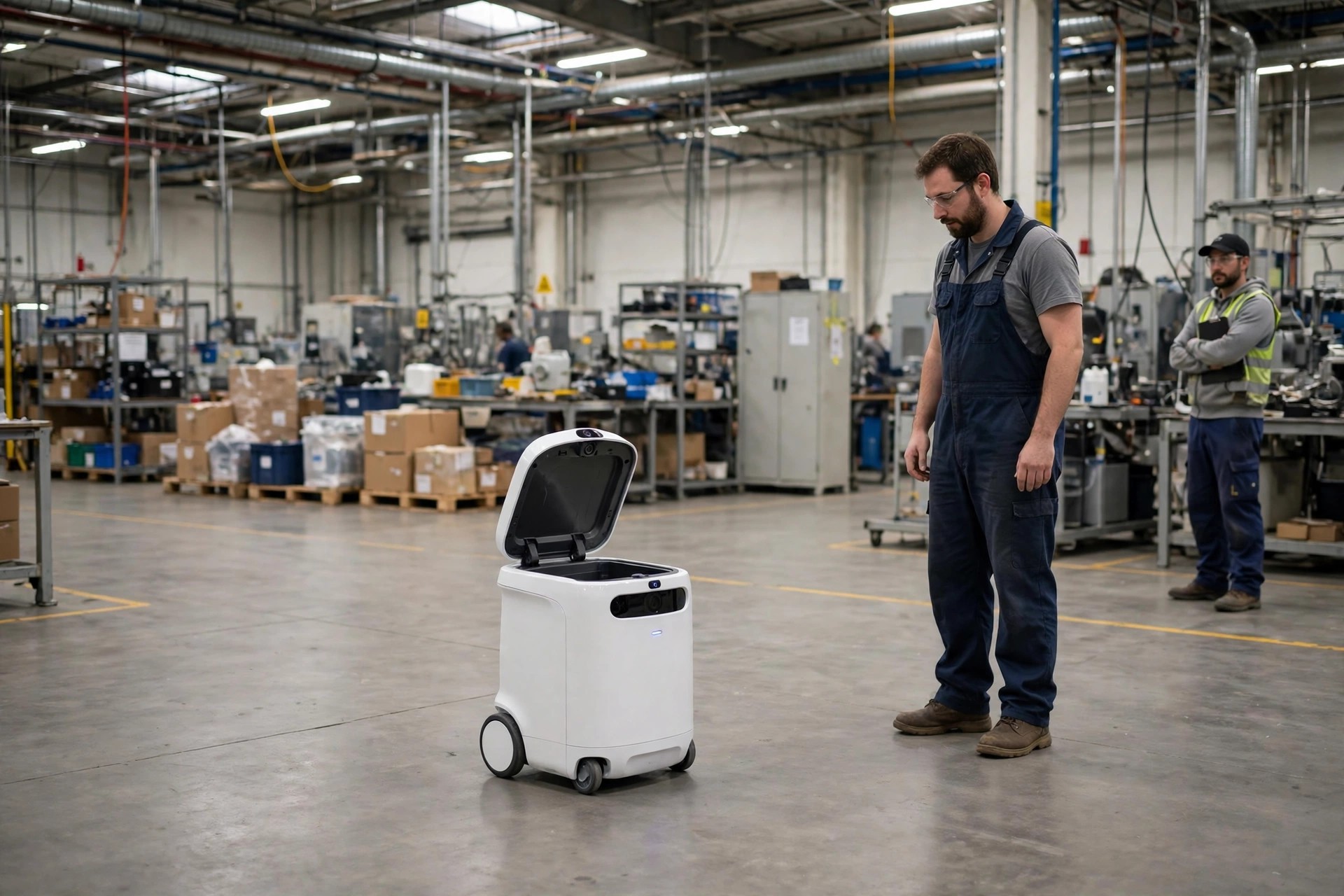
Order samples from three suppliers and run the same five tests on each. First, the summon: call the bin from across the room on voice, then on the app, then on the remote, and note which methods actually work — the listing will claim all three and the sample will tell you the truth. Second, the obstacle course: put chair legs, a cable, and a rug in its path and watch it navigate. A bin that bumps into everything is a return waiting to happen, and it only shows up on a real floor, not a bare desk.
Third, the lid: time how fast it opens, check whether it seals against odour when closed, and confirm it stays open while you are using it instead of closing on your hand. Fourth, the battery: run it through a full day of summons and lid openings and time how long it lasts, then check how it charges — USB cable or a charging dock, and how long a full charge takes. Fifth, the bag system: check whether it takes standard trash bags or a proprietary roll, because a proprietary roll is a running cost your customer will discover after the sale. And check the capacity in litres against the listing — a bin that claims 12 litres and holds 9 is telling you the truth about the bulk run.
4. Paperwork and the “AI” label: what to ask for, what to ignore
Paperwork comes before payment. Ask for CE and RoHS reports, and check the report dates and the product description on them — a report for a different product does not cover yours. If the battery is lithium and the order ships by air, ask for the UN38.3 test report for the exact battery model, not a report for a different model. A supplier that has shipped lithium batteries by air before will have these files ready; one that has to “ask the factory” for them has never been asked.
Ignore the word “AI” on the listing. In this category it is marketing, not a specification — the bin has sensors and a motor, not a mind. What matters is the sensor list (infrared, ultrasonic, or both), the control methods (voice, app, remote), and the obstacle-avoidance behaviour you saw on the sample. Do not repeat an “AI” claim in your own listing that the sample cannot back up, and do not let a supplier charge you an “AI premium” for a sensor and a remote. For how to vet a supplier before you commit, see our guide to choosing a reliable supplier.
5. The viral window: why this week, and the Christmas clock
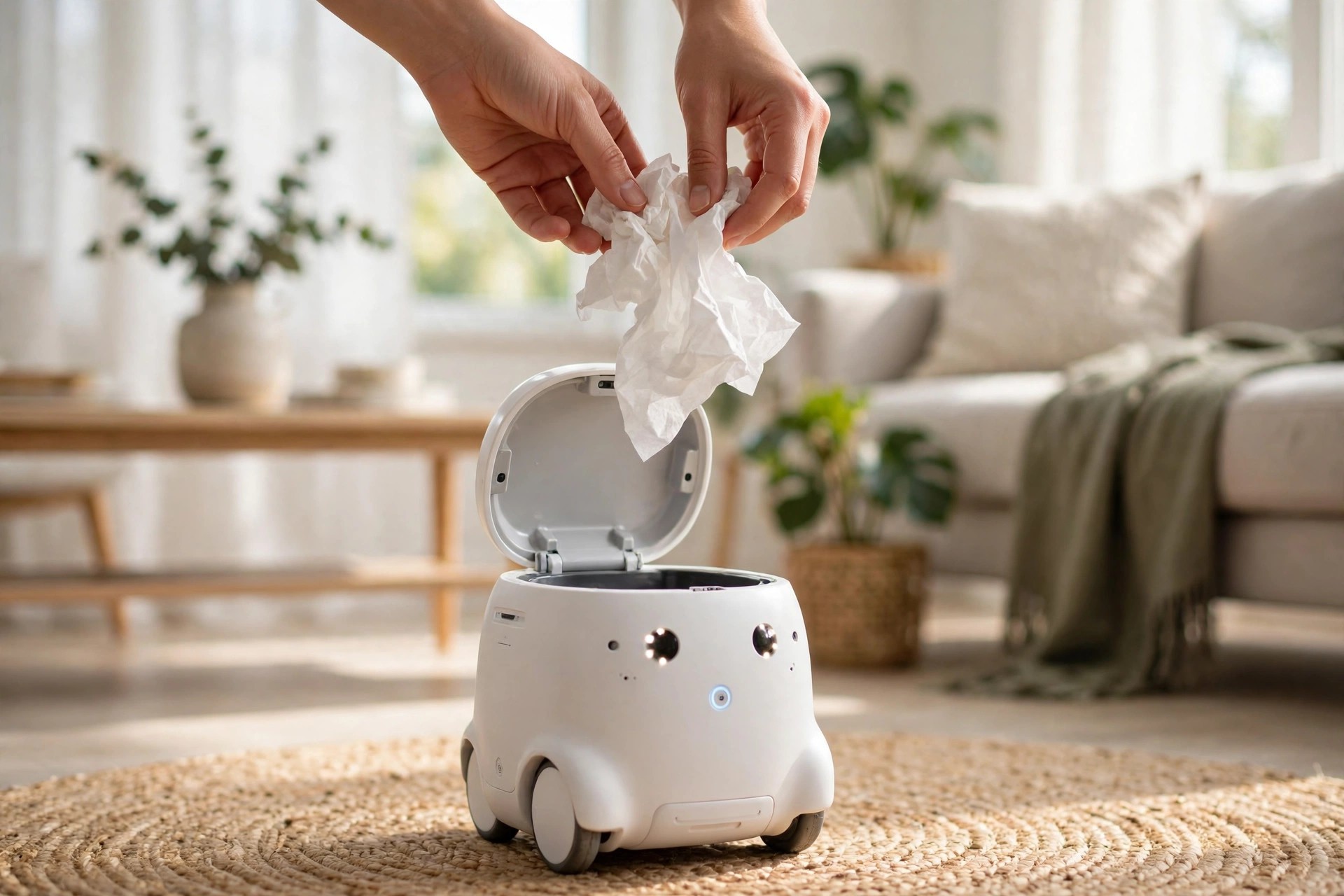
This product has a window, and it is open right now. The dinosaur robot video was posted on November 13, the Shenzhen metro bin went viral in September, and the category is the kind of demo that sells itself on TikTok — a bin that drives to you is a video, not a photograph. Gift retailers and TikTok sellers are the buyers, and they buy on the video, so a supplier with a good demo clip is worth more than a supplier with a good spec sheet. Black Friday is November 27 and Cyber Monday is November 30, and a novelty gift line needs stock in hand before then.
Sea freight for Christmas cut off around mid-November, so a bulk order placed this week will not arrive by sea before Christmas — air freight is the only lane left, and lithium batteries fly under stricter rules than ordinary cargo, which is why the UN38.3 report in section 4 matters twice over. Build the air-freight cost into your landed cost before you commit — on a $60 product the freight is a real share of the total, and a landed cost calculated on sea-freight rates is a fantasy. The category does not end at Christmas: a cute robot bin sells all year as a gift and a smart-home novelty, so a well-tested product is a line you can reorder into January and February.
FAQ
Does the trash can really drive to you when you call it?
On the real robot-bin models, yes — a voice command, an app button, or a remote summons the bin, it drives over on wheels with obstacle-avoidance sensors, opens its lid, and returns to its dock. But verify it on a live video call before ordering: some listings use “robot” loosely for a can with wheels and a remote control.
What should I pay for one?
Peer listings in November 2026 put the home range roughly at $9–$60 a unit: sensor-lid cans around $4–$12, auto-bagging models around $17–$40, and the movable robot-bin tier around $59 retail. The B2B MOQ for the robot tier is not publicly listed — confirm it with the supplier.
What safety reports should I ask for?
Ask for CE and RoHS reports, and UN38.3 for the battery if the order ships by air. Check the report dates and the product description — a report for a different product does not cover yours.
Start with the sample, not the bulk order
AI trash cans reward buyers who test the summon before they talk price. Get three samples on a live video call, run the obstacle course, check the lid and the battery, get the UN38.3 report for the exact battery, and only then place the bulk order — by air, if it is for Christmas. See our AI Smart Trash Can product page for a live example of this category. If you want help finding and vetting suppliers, our $129 Sourcing Trial covers five suppliers, a side-by-side comparison, and a recommendation — see our Pricing page for details.
How to source dash cams from China in 2026: dual 4K front + 1080P rear, STARVIS sensor night tests, loop recording and G-sensor locks, heat and parking-mode che···
Как заказать пусковые устройства из Китая в Россию в 2026 году: реальные и заявленные пико···

How to buy from 1688 without speaking Chinese in 2026: browser translation, image search and Chinese keywords, reading price tiers and supplier badges, landed c···