
One-stop comprehensive solution provider
Short answer: Buy a dual-channel dash cam — 4K front plus 1080P rear — with WiFi, GPS and a Sony STARVIS sensor, and judge it on night footage, not the spec sheet. Ask for a sample, read a license plate at 10 metres in the dark, leave it recording on a warm dashboard for hours, and check the loop recording never drops a file. Peer listings in November 2026 put this class roughly at $13–$25 factory price at MOQs as low as 2 units, and fleet buyers and auto-accessory distributors reorder it all year, so a tested unit is a line, not a one-off seasonal buy.
Dash cams are the steady seller in the car-electronics aisle: cheap to ship, easy to demonstrate, and bought by people who have just had one accident without footage and never want to be in that position again. The market is not a fad — every fleet renewal, every rideshare onboarding and every Christmas gift list produces the same order, and distributors in the US and Europe reorder the same unit year after year. The product looks simple — a camera, a mount, a cable — but the quality gaps are where a buyer gets burned: night footage that is a blur of headlights, a loop that overwrites the one file you needed, and a camera that stops recording the first hot afternoon it sits on a dashboard. This guide covers how to tell a good one apart.
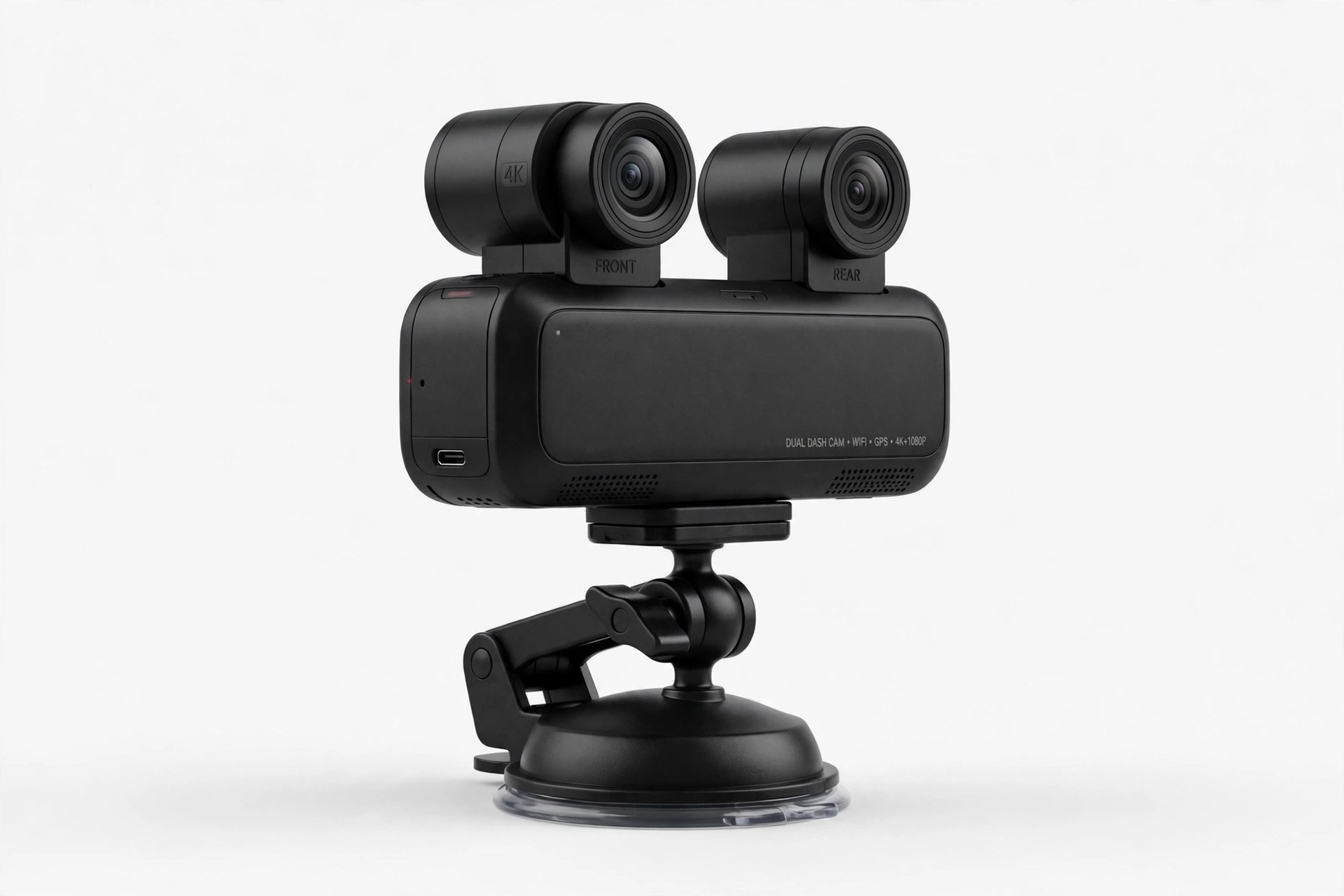
Everything about a dash cam comes back to whether the footage is readable when it matters. A unit that claims 4K but uses a cheap sensor still records a file labelled 4K — it just smears every license plate into white blobs the moment headlights hit it, and your customer finds out after the accident, when the footage is the whole point of the purchase.
Match the sensor to the job first. The quality benchmark buyers ask for by name is the Sony STARVIS sensor, built for low light; ask the supplier for the exact chipset and sensor model in writing, and check it against the sample. As a rough rule from the November 2026 listings: entry 3-lens 1080P models run about $4.50–$6.75 at MOQ 1; front-and-rear 1080P models about $9.90–$12.80 at MOQ 10; dual 4K front plus 1080P rear models about $12.96–$25.20 at MOQ 2; 4K dual-lens models $24–$34.90 at MOQ 1. Decide which buyers you serve, then buy that class — a unit oversized for its market wastes margin, and one undersized for it generates returns.
Then test the claim on a sample, at night. Take each sample out after dark, drive past parked cars, and freeze the frame on a plate at 10 metres. A good unit reads it; a weak one gives you a bright rectangle. Also check the rear camera the same way — a dual-channel set is only as good as its weaker lens, and suppliers love to put the good sensor in front and a cheap one behind. For how to vet a supplier before you commit, see our guide to choosing a reliable supplier.
A dash cam records in a loop, overwriting the oldest files when the card fills up — so the loop is the product as much as the lens. Check it first: run the sample until the card is full, keep driving, and confirm the newest files are intact and the oldest are gone, with no gaps and no corrupted clips at the overwrite point. A camera that drops a file at the rollover has failed at the one job it exists for.
Check the G-sensor next: it is supposed to lock the current file when it feels an impact, so the loop cannot overwrite it. Test it on a sample — tap the camera firmly, or brake hard in a safe place — and confirm the file is marked protected and still there after the card fills. A G-sensor that is too sensitive locks every pothole and fills the card with protected files until nothing records at all; one that is too numb locks nothing. Ask the supplier what sensitivity levels the firmware offers and whether it can be adjusted. Also check the SD card question directly: is a card included, what class does it need, and what is the maximum size the camera accepts? A camera shipped without a card, or with a slow card that cannot keep up with 4K, is a support ticket waiting to happen. For the full checklist of what to verify before goods leave the factory, see our inspection guide.
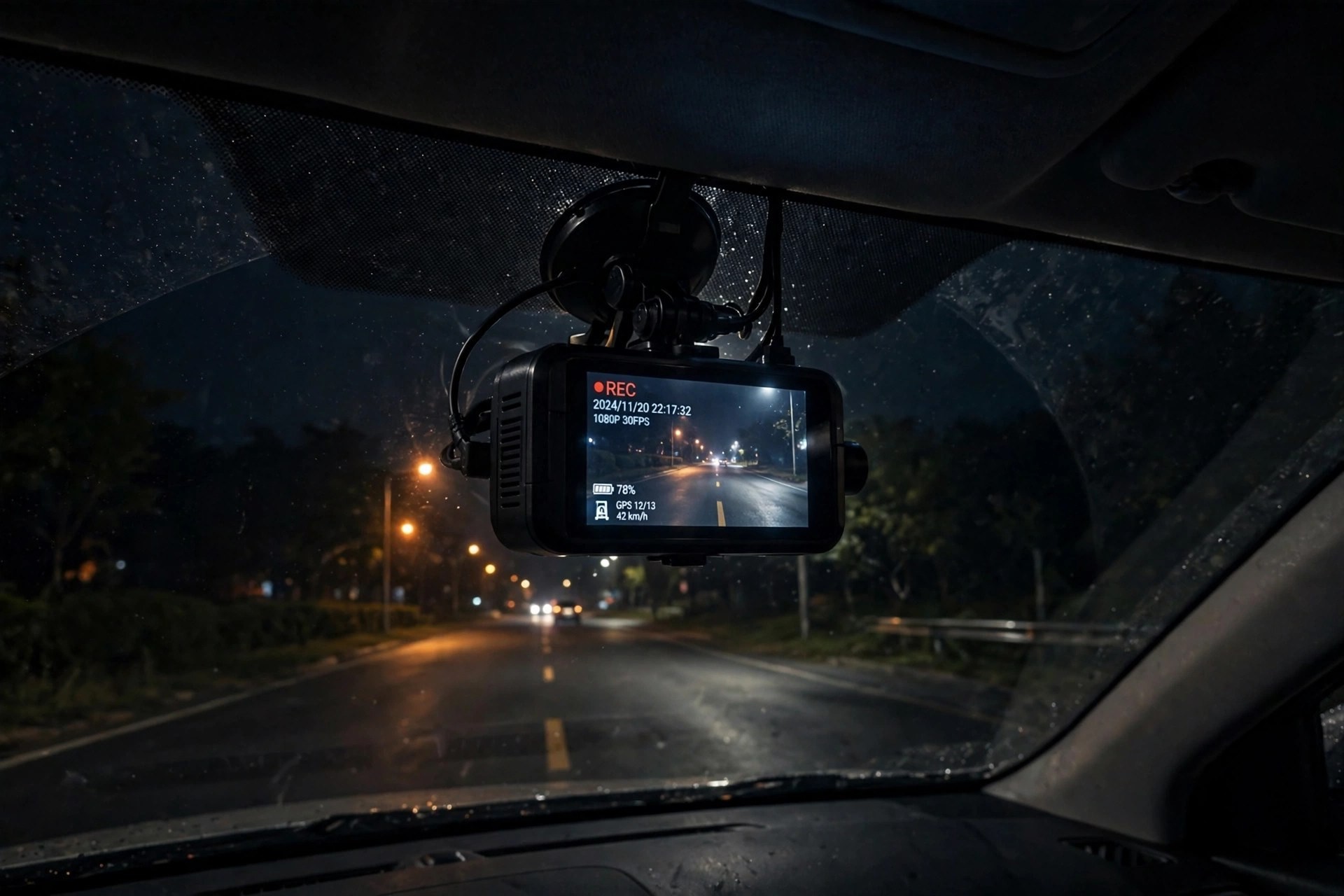
A dash cam lives on a dashboard in direct sun, so heat resistance is not a feature — it is the product. Ask for the operating temperature range in writing, then test it: leave the sample recording on a warm dashboard for hours and confirm it keeps recording instead of shutting down, rebooting, or warping its mount. A camera that overheats and stops on a summer afternoon is a return waiting to happen, and it always fails on the hottest day, when the buyer needs it most.
Parking mode is the second test. It is supposed to keep watch while the car is parked, recording on motion or impact — but it draws power the whole time, and a badly set one drains the car battery overnight. Ask for the parking-mode power draw in writing, and check whether the camera has a low-voltage cut-off that stops it before the battery goes flat. A supplier that has sold to fleet buyers will have these numbers ready; one that has to "ask the factory" for them has never been asked.
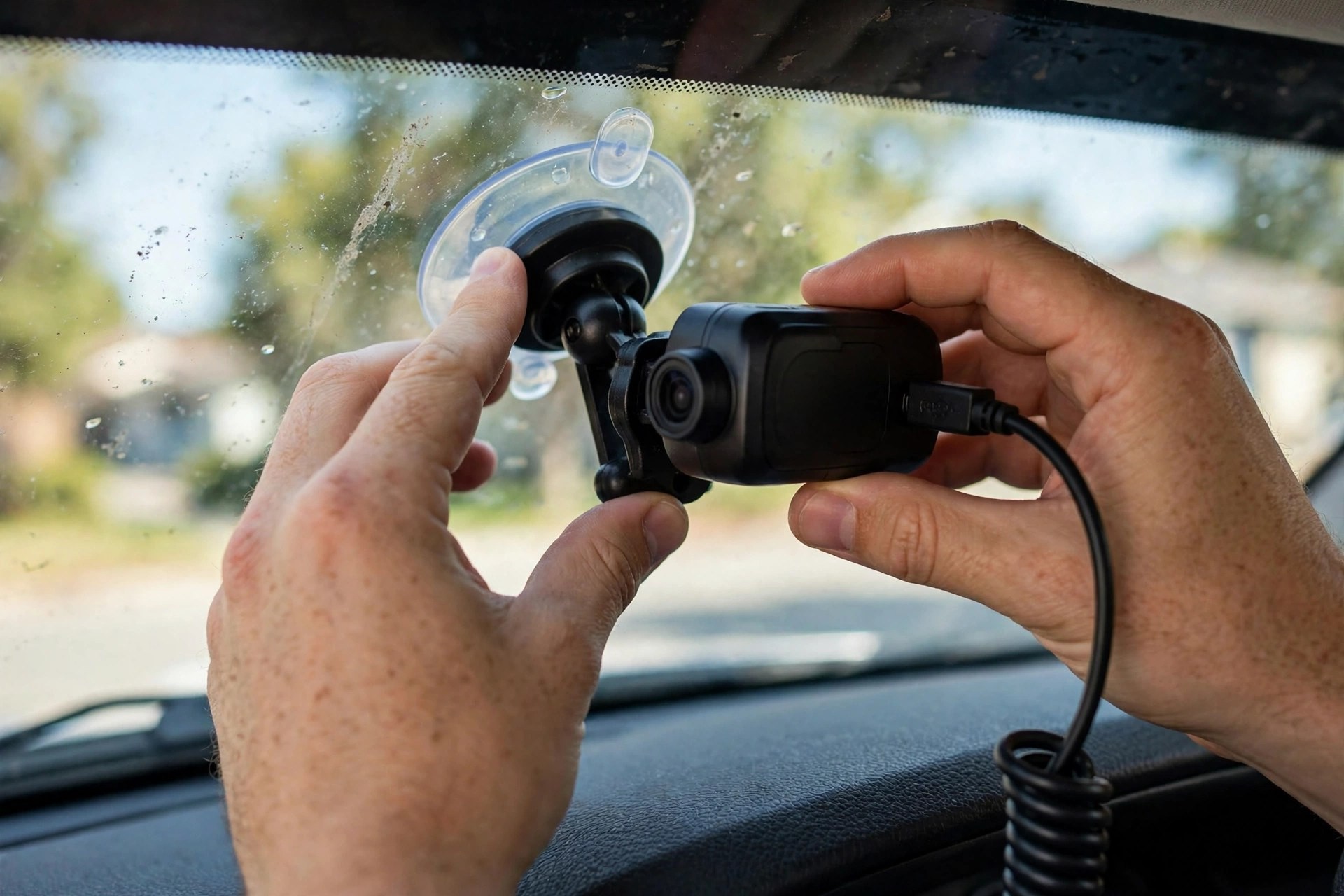
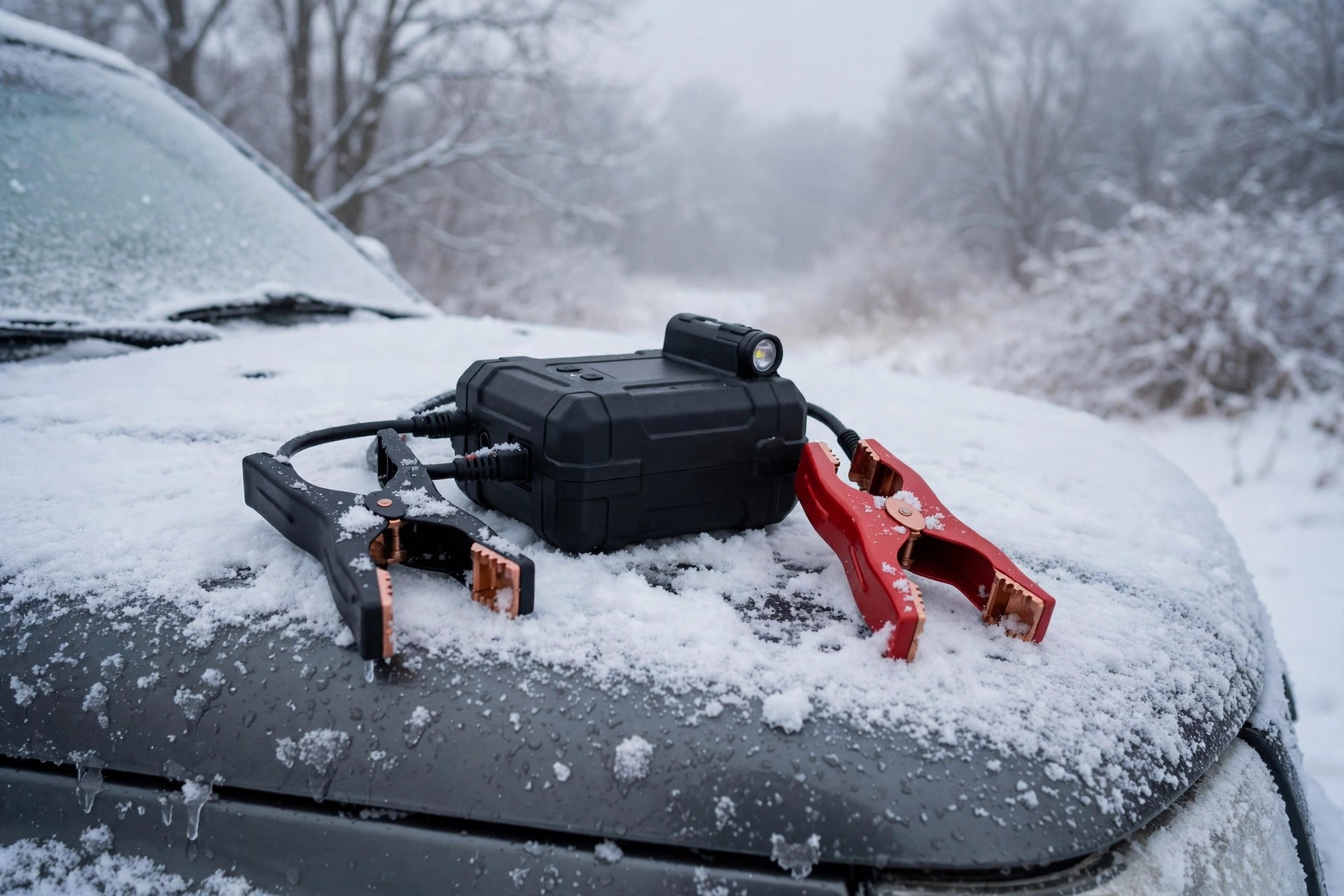
Check the power setup the same way you check the heat: confirm the cable length reaches from the mount to the socket without dangling across the wheel, check whether a hardwire kit is included or extra, and confirm the WiFi app actually connects — open it on a sample, pair the camera, and watch a clip download. An app that crashes, drops the connection, or takes minutes to load a 30-second clip is a support cost, not a feature. See our Car Jump Starter product page for a live example of this auto line, and our car fridge for the other half of the in-car kit. It pairs with the jump starter — see our guide to sourcing car jump starters from China for the other half of the emergency kit.
Peer listings in November 2026 put a dual 4K front plus 1080P rear dash cam roughly at $13–$25 factory price at MOQs as low as 2 units, with low-to-mid saturation among auto-electronics distributors — steadier demand than the viral gadgets that spike for a month and vanish. Branded dual-4K models run higher, around $91–$100 at MOQ 1, and 3-channel 4K models about $39 at MOQ 2. Factory prices vary widely by sensor and chipset, so do not anchor on a single FOB number: get three written quotes for the same specification — same resolution front and rear, same sensor model, same WiFi and GPS set — and compare those, not headline prices for different units.
Order from three suppliers, run the night-footage test on each, and compare real plate readability before you talk volume. The sample round also catches small defects a photo never shows: a mount that vibrates loose on a rough road, a GPS that takes minutes to lock, a WiFi app that only works on one phone brand. If you want help finding and vetting suppliers, our $129 Sourcing Trial covers five suppliers, a side-by-side comparison, and a recommendation — see our Pricing page for details.
Private label is straightforward for this category, and it is where a generic camera becomes a distributor's own line. Custom logo, a branded startup screen and firmware in your buyer's language are usually available at 100+ units — but they change what the product is. A camera in a plain brown box is a commodity; the same camera in a printed box with your logo, a quick-start card and a hardwire kit is a retail-ready car electronic a distributor can put on a shelf.
The other private-label question is the bundle: the mount and cable are standard, but a hardwire kit, a high-endurance SD card and a rear-camera extension cable are the extras fleet buyers ask for first, and they cost little at volume. Whatever you choose, make sure the sample you approve is the exact configuration you will receive in bulk, and get it confirmed in writing. A factory that swaps the sensor or the chipset between sample and bulk is not one to reorder from — and for a product your buyers rely on after an accident, that swap is the difference between a repeat order and a refund. For how to buy from 1688 without speaking Chinese, see our 1688 guide.
What resolution do I actually need?
A dual-channel set — 4K front plus 1080P rear — covers most buyers: the front reads plates, the rear covers rear-end collisions. Single-channel 1080P is fine for a budget line, but match the sensor to the footage and verify it with a night test on a sample, because a 4K label on a cheap sensor reads nothing in the dark.
What should I ask for on the sample?
Night footage with a plate readable at 10 metres, loop recording with no dropped files at the rollover, a G-sensor lock that survives a full card, heat resistance after hours on a warm dashboard, WiFi app stability, GPS lock speed, and parking-mode power draw with a low-voltage cut-off. Ask for CE, FCC and RoHS reports, and the exact chipset and sensor model in writing.
Does the SD card come with it?
Not always — ask directly. Confirm whether a card is included, what class it needs, and the maximum size the camera accepts. A 4K camera needs a fast, high-endurance card; a slow card corrupts clips, and a missing card is a support ticket on day one.
Dash cams reward buyers who test the footage before they talk price. Run three samples after dark, read a plate at 10 metres, check the loop never drops a file, leave the camera recording on a warm dashboard, and only then place the bulk order. See our Dash Cam product page for the dual 4K unit this guide covers, and our Car Jump Starter product page for the other half of the emergency kit. If you want help finding and vetting suppliers, our $129 Sourcing Trial covers five suppliers, a side-by-side comparison, and a recommendation — see our Pricing page for details.
How to source dash cams from China in 2026: dual 4K front + 1080P rear, STARVIS sensor night tests, loop recording and G-sensor locks, heat and parking-mode che···
Как заказать пусковые устройства из Китая в Россию в 2026 году: реальные и заявленные пико···

How to buy from 1688 without speaking Chinese in 2026: browser translation, image search and Chinese keywords, reading price tiers and supplier badges, landed c···