
One-stop comprehensive solution provider
Short answer: Buy a 12V lithium jump starter rated around 2000A peak and 12000mAh — enough for most petrol cars up to about 8.0L and diesels up to about 6.0L — and verify the rating yourself before you order volume. Ask for the UN38.3 battery test for the exact battery pack, check the clamps and cables on a real dead battery, and confirm the safety cut-offs work. Retail listings in November 2026 put this class roughly at €69–€89, and auto-parts distributors reorder it all year, so a tested unit is a line, not a one-off seasonal buy.
Car jump starters are the quiet steady seller in the auto-accessories aisle: cheap to ship, easy to demonstrate, and bought by people who have just been stranded once and never want it to happen again. The market is not a fad — every winter produces the same dead batteries, and distributors in the US and Europe reorder the same unit year after year. The product looks simple — a battery pack, two clamps, a cable — but the quality gaps are where a buyer gets burned: a peak-amp number that is fiction, clamps that spark or slip off the terminal, and paperwork that will not survive a customs check. This guide covers how to tell a good one apart.
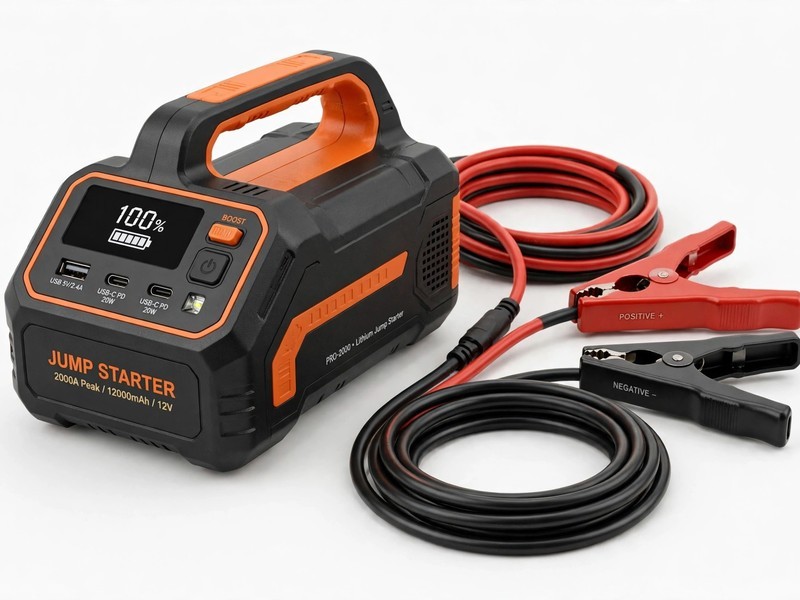
Everything about a jump starter comes back to peak amps: the maximum current it can deliver in a short burst to turn an engine over. A unit that claims 4000A but can only deliver 800A still lights up its display and looks fine on a desk — it just clicks and dies when it meets a real dead battery on a cold morning, and your customer finds out on the roadside.
Match the rating to the engine first. As a rough rule from retail buying guides: small petrol cars need around 400–600 peak amps; SUVs and trucks need 1000A or more; a 2000A unit covers most petrol engines up to about 8.0L and diesels up to about 6.0L; the biggest 3000–4000A units cover large petrol engines up to 10.0L and diesels up to 10.0L. Decide which vehicles your buyers drive, then buy that class — a unit oversized for its market wastes margin, and one undersized for it generates returns.
Then test the claim on a sample. Order from three suppliers, take each sample to a genuinely flat battery — not a half-charged one — and try a cold start. A good unit turns the engine over on the first or second try; a weak one clicks, drops voltage, and needs its “boost” button to do anything at all. Also check how many starts you get from one charge: a real 12000mAh pack gives several starts before it needs recharging, and a sample that is dead after one jump is telling you the truth about the bulk run.
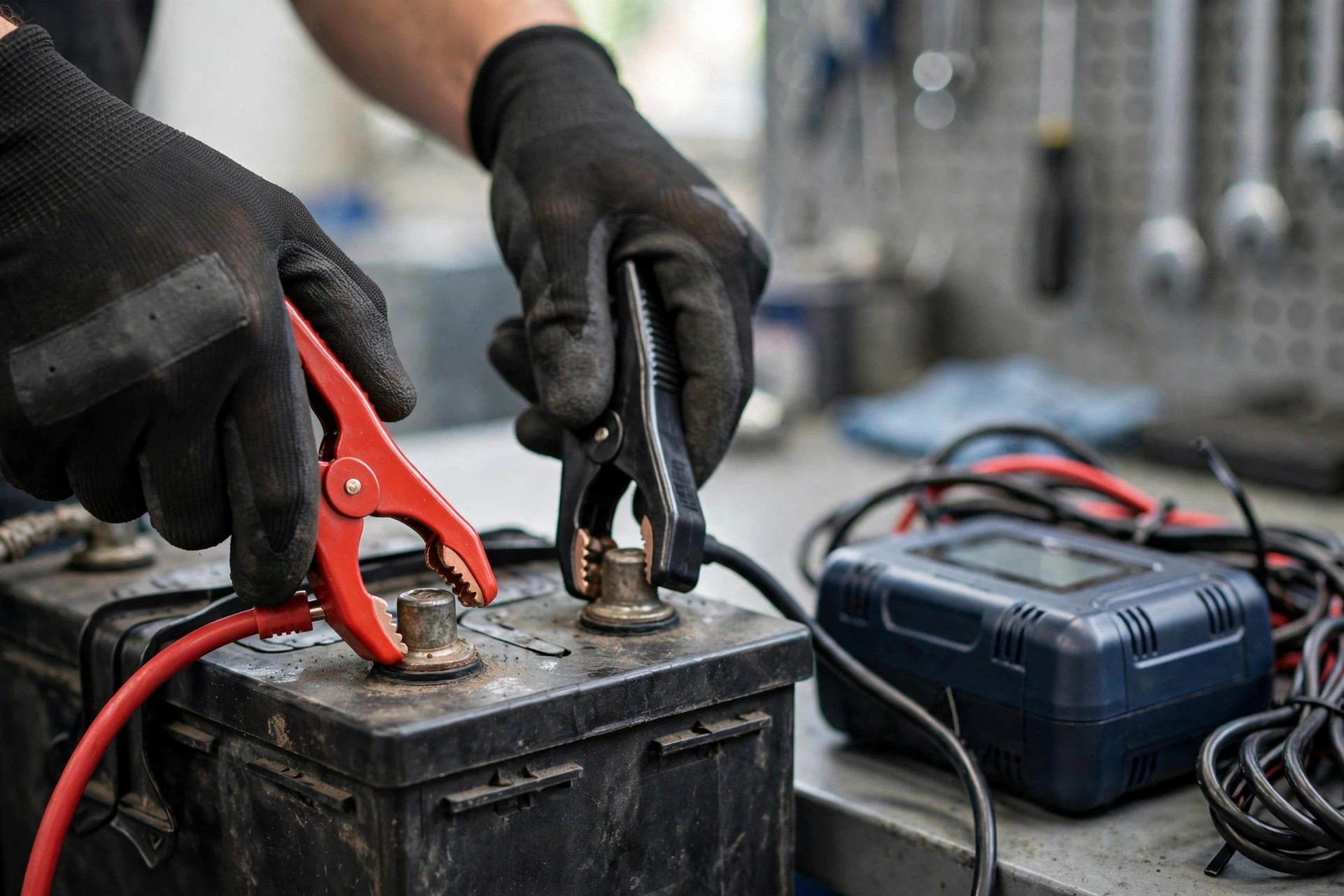
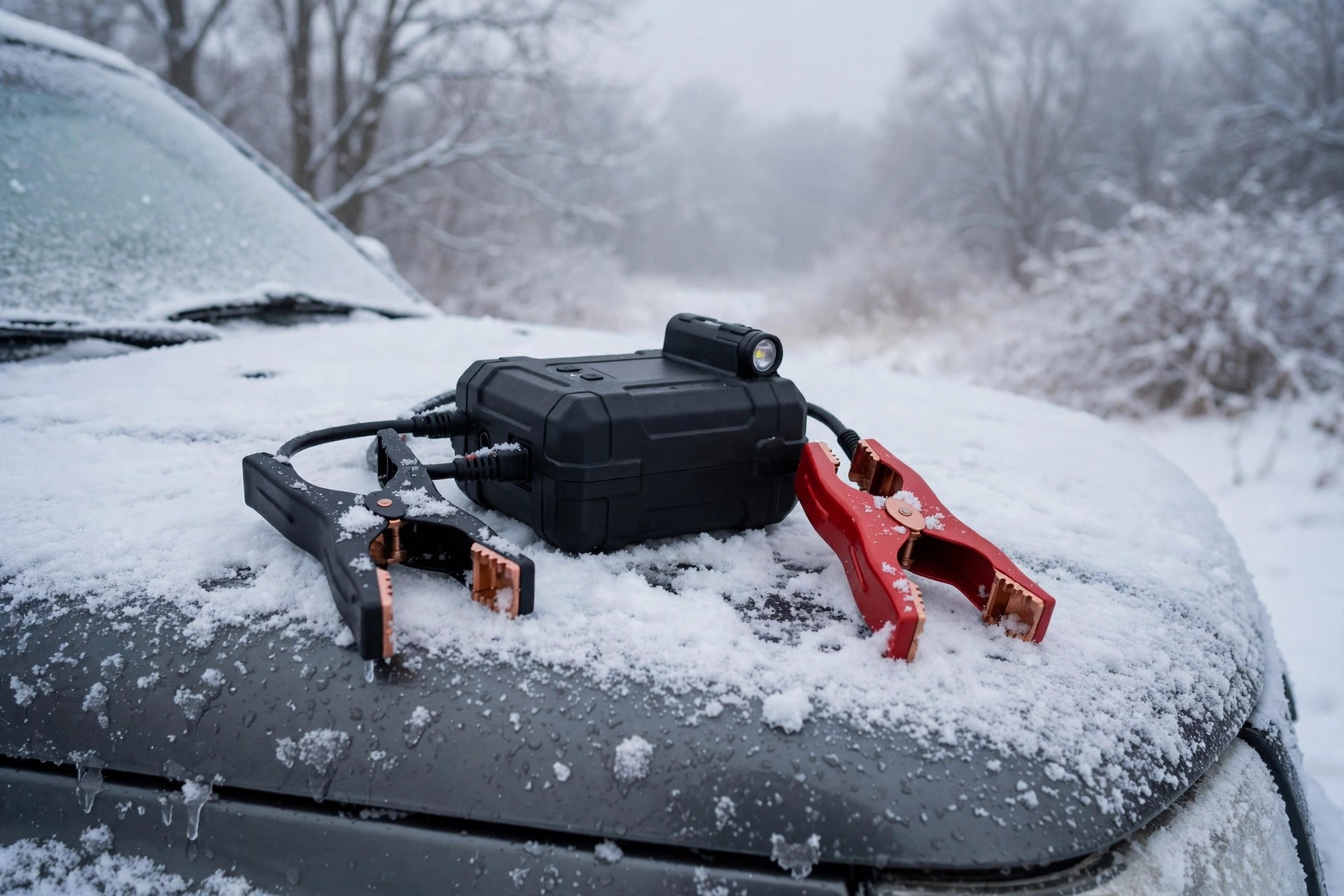
Capacity is only half the test — the other half is the hardware between the battery and the car. Check the clamps first: they should bite the terminal firmly and stay put without being held. Thin, springy clamps that slip off or spark when they touch the post are a return waiting to happen, and they are also a safety problem. Check the cable gauge and length too — short, thin cables force the pack to sit on the engine bay, while a sensible length lets it rest clear of moving parts.
Check the capacity the same way you check the amps: run the sample flat through repeated starts and count them, then use the USB ports to charge a phone and see whether the pack still has anything left. A capacity printed on the case means nothing until a discharge test backs it up. And check the extras buyers actually use: a built-in LED light for night-time jumps, USB-C charging for the pack itself, and a display that shows remaining charge honestly instead of sitting at 100% until it dies. For the full checklist of what to verify before goods leave the factory, see our guide to pre-shipment inspection.
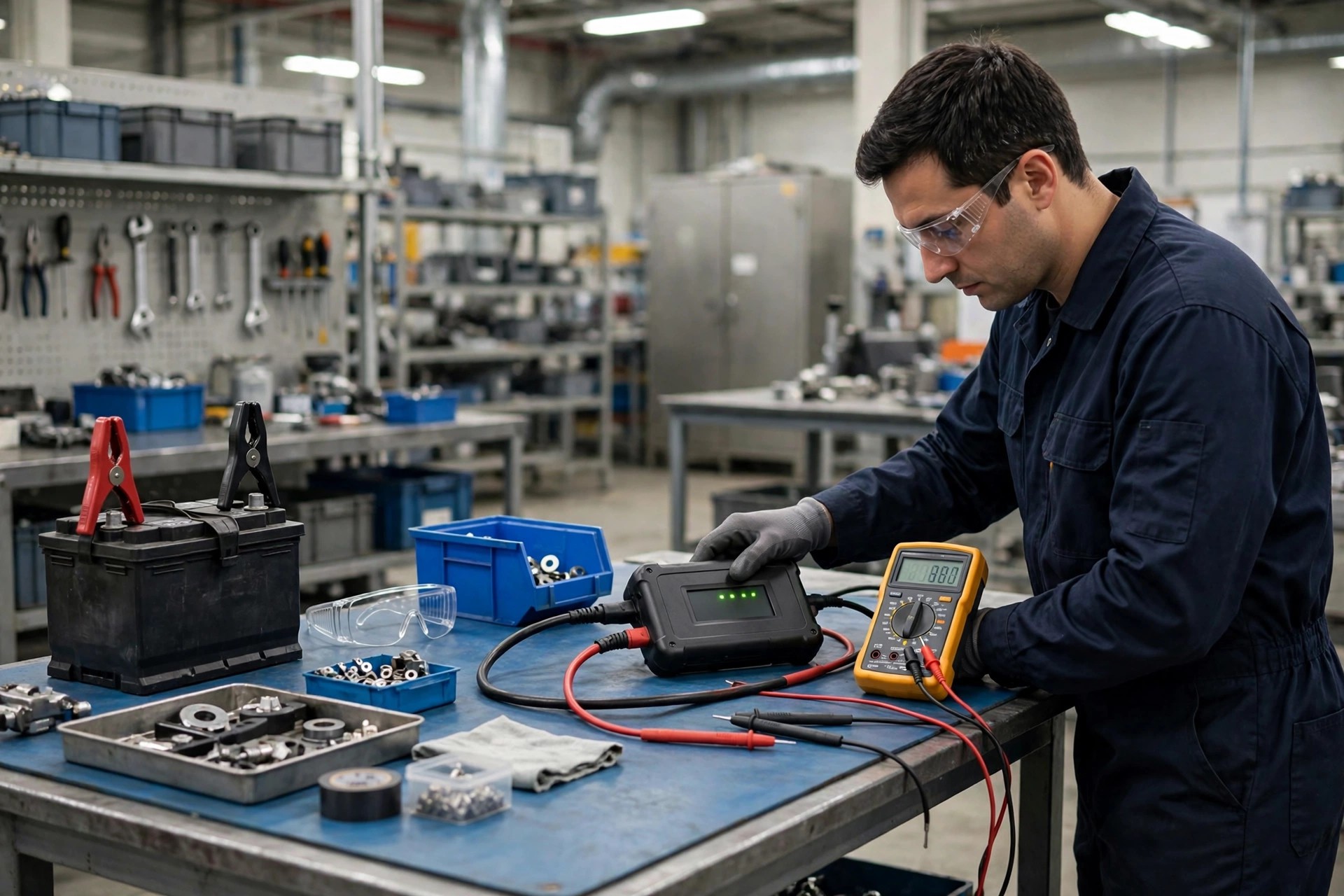
A jump starter is a lithium battery with two exposed metal clamps, so safety is not a feature — it is the product. The minimum is reverse-polarity protection: if the clamps go on the wrong terminals, the unit must refuse to deliver current instead of sparking. Ask for over-charge, over-discharge and short-circuit protection as well, and test the reverse-polarity cut-off yourself on a sample — connect it backwards on purpose, in a safe setting, and confirm nothing happens. A supplier that flinches at that test has never had a customer do it.
Paperwork comes before payment. Ask for the UN38.3 test report for the exact battery pack — not a report for a different pack — and confirm the capacity printed on the unit matches it. Lithium batteries ship as Class 9 dangerous goods (UN3480 for standalone packs, UN3481 when packed with equipment), and air freight requires the pack to be shipped at no more than 30% charge on cargo aircraft only. Ask for the CE and RoHS reports too, and check the report dates: a report from three years ago for a different battery does not cover your order. A supplier that has shipped lithium batteries before will have these files ready; one that has to “ask the factory” for them has never been asked.
Peer retail listings in November 2026 put a mid-range 12V jump starter roughly at €69–€89 retail, with low-to-mid saturation among auto-accessories distributors — steadier demand than the viral kitchen gadgets that spike for a month and vanish. Factory prices were not reliably published at the time of writing, so do not anchor on a single FOB number: get three written quotes for the same specification — same peak amps, same capacity, same clamp and cable set — and compare those, not headline prices for different units.
Order from three suppliers, run the cold-start test on each, and compare real starts per charge before you talk volume. The sample round also catches small defects a photo never shows: a boost button that needs three presses, a display that lies about remaining charge, a case that cracks at the hinge. See our Car Jump Starter product page for a live example of this category. For how to vet a supplier before you commit, see our guide to choosing a reliable supplier.
Private label is straightforward for this category, and it is where a generic pack becomes a distributor’s own line. Custom colours, logo printing on the case, and a printed gift or retail box are usually cheap at 500+ units — but they change what the product is. A pack in a plain brown box is a commodity; the same pack in a printed box with your logo, a quick-start card and a carrying case is a retail-ready auto accessory a distributor can put on a shelf.
The other private-label question is the bundle: clamps and cables are standard, but a carry case, a USB-C cable and a printed instruction card are the extras distributors ask for first, and they cost little at volume. Whatever you choose, make sure the sample you approve is the exact configuration you will receive in bulk, and get it confirmed in writing. A factory that swaps the clamp set or the battery cell between sample and bulk is not one to reorder from — and for a product your buyers will use in an emergency, that swap is the difference between a repeat order and a refund. If you want help finding and vetting suppliers, our $129 Sourcing Trial covers five suppliers, a side-by-side comparison, and a recommendation — see our Pricing page for details.
How many peak amps do I need?
Small petrol cars need around 400–600 peak amps; SUVs and trucks need 1000A or more. A 2000A unit covers most petrol engines up to about 8.0L and diesels up to about 6.0L. Match the rating to the engines your buyers actually drive, then verify it with a cold-start test on a sample.
What safety reports should I ask for?
Ask for the UN38.3 battery test report for the exact battery pack, plus CE and RoHS reports. Check the report dates and the product description on them — a report for a different pack does not cover yours. Also confirm reverse-polarity, over-charge and short-circuit protection, and test the reverse-polarity cut-off yourself.
Can jump starters ship by air?
Yes, but under lithium-battery rules: they are Class 9 dangerous goods, shipped at no more than 30% charge, on cargo aircraft only for standalone packs. Build the dangerous-goods freight cost into your landed cost before you commit — it is a large share of the total on a sub-€100 product.
Car jump starters reward buyers who test the amps before they talk price. Run three samples on a genuinely flat battery, count the starts per charge, check the clamps bite and the reverse-polarity cut-off works, get the UN38.3 report for the exact pack, and only then place the bulk order. See our Car Jump Starter product page for a live example of this category. If you want help finding and vetting suppliers, our $129 Sourcing Trial covers five suppliers, a side-by-side comparison, and a recommendation — see our Pricing page for details. A Russian-language version of this guide is also available.
How to source dash cams from China in 2026: dual 4K front + 1080P rear, STARVIS sensor night tests, loop recording and G-sensor locks, heat and parking-mode che···
Как заказать пусковые устройства из Китая в Россию в 2026 году: реальные и заявленные пико···

How to buy from 1688 without speaking Chinese in 2026: browser translation, image search and Chinese keywords, reading price tiers and supplier badges, landed c···