
One-stop comprehensive solution provider
Short answer: Buy a dual-pack 4000mAh rechargeable hand warmer with a real, tested battery — peer listings put it roughly at $4.80–$5.50 a pair at an MOQ around 60 units — and verify the capacity yourself before you order volume. Ask for the CE/RoHS reports and the UN38.3 battery test, run a sample through a full charge-and-discharge cycle, and check the heat settings yourself. Sea freight for Christmas is already cut off, so this season’s orders go by air.
Rechargeable hand warmers are the quiet winter winner: cheap, high-volume, and a natural Christmas gift line. The market is growing about 7% a year and is expected to reach $1.8 billion by 2030, driven by the shift from disposable warmers to rechargeable ones. The product looks simple — a pocket-sized warmer, a USB cable, a battery inside — but the quality gaps are where a buyer gets burned: a battery whose claimed capacity is fiction, a warmer that fades after ten minutes on high, and paperwork that will not survive a customs check. This guide covers how to tell a good one apart, and it pairs with our heated vest guide as the second half of a winter-warmth range.
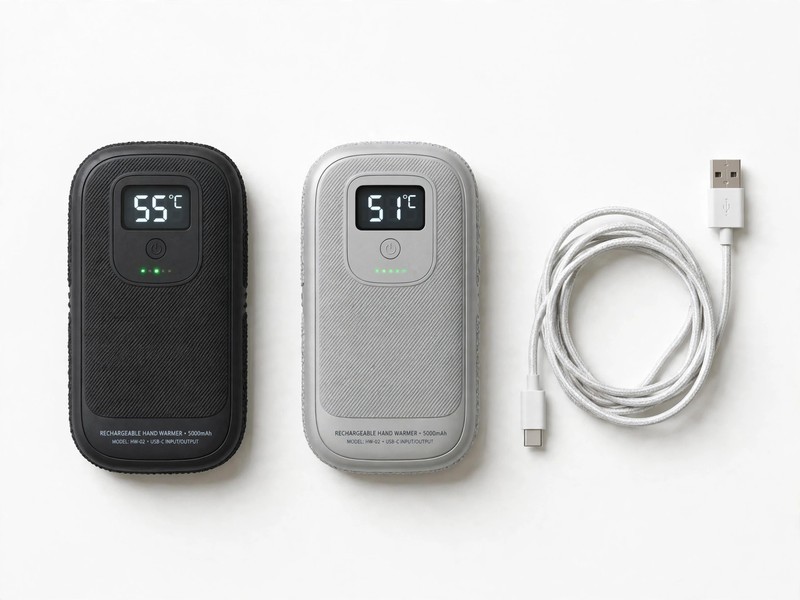
1. The battery is the product — test the capacity, don’t trust the label
Everything about a hand warmer comes back to its battery, and the most common trick in this category is an overstated capacity. A pack printed 4000mAh that actually holds 2500mAh still feels warm on first use — it just dies halfway through the afternoon, and your customer finds out on a cold day. Order samples from three suppliers and run each one through a full charge-and-discharge cycle: charge it fully, switch it on at a fixed setting, and time how long it actually runs. Then compare runtimes: a genuine 4000mAh pack runs noticeably longer than a 2000mAh one at the same setting, and a sample that dies early is telling you the truth about the bulk run.
Paperwork comes before payment. Ask for the UN38.3 test report for the exact battery model — not a report for a different model — and confirm the capacity printed on the pack matches it. Ask for the CE and RoHS reports too, and check the report dates: a report from three years ago for a different battery does not cover your order. A supplier that has shipped lithium batteries by air before will have these files ready; one that has to “ask the factory” for them has never been asked.
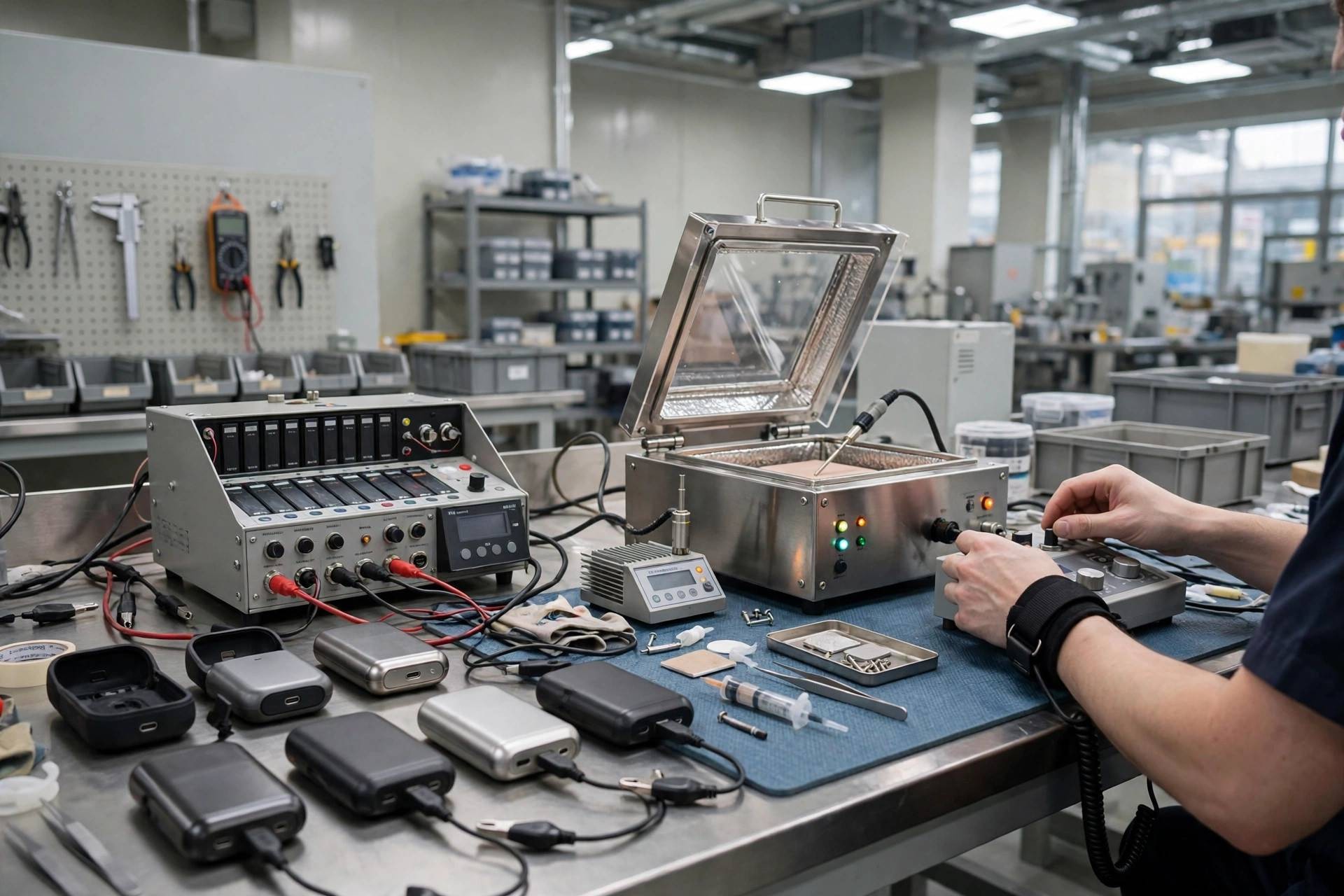
2. Heat that lasts: settings, maximum temperature, and the dual-pack logic
Capacity is only half the test — the other half is how the warmer actually heats. Check the heat settings first: a good warmer has at least two or three settings, low to high, with a clear difference between them. A warmer with one setting that is either too hot to hold or too weak to notice is a return waiting to happen. Check the maximum temperature on your own hands, not on a spec sheet — hold the sample at its highest setting and ask whether it is comfortably warm or uncomfortably hot. Then check the heat over time: switch it on high, wait half an hour, and feel whether it is still at full heat or has faded to lukewarm. The fade is the second most common gap after capacity, and it only shows up in a real-use test, not on a desk.
The dual pack is worth understanding, because it changes the value calculation. Two warmers — one for each hand — is the standard configuration, and the $4.80–$5.50 peer listing range is for the pair, not per piece. When you compare quotes, make sure every supplier is quoting the same thing — dual pack, stated capacity, stated heat settings. For the full checklist of what to verify before goods leave the factory, see our guide to pre-shipment inspection.
3. Price and MOQ: cheap per pair, but the sample is the cost
Peer listings in November 2026 put a dual-pack 4000mAh rechargeable hand warmer roughly at $4.80–$5.50 a pair, at an MOQ around 60 units. That low floor lets gift sellers and small brands test the product with sixty pairs instead of a full production run. But read the price ladder carefully: a pair quoted far below the range almost always means a smaller battery than the label claims, fewer heat settings, or a display that is printed on rather than working.
Order from three suppliers, run the full charge-and-discharge test on each, and compare runtimes before you talk volume. The sample round also catches small defects a photo never shows: a cable that only works at one angle, a button that is easy to press by accident, a warmer that switches itself off after twenty minutes. See our Heated Vest product page for the other half of this winter range.
4. Private label and gift packaging: where the margin is
Private label is straightforward for this category, and it is where a cheap product becomes a real gift line. Custom colours and logo printing are usually cheap at 500+ units, and a custom gift box adds little on top — but it changes what the product is. A pair in a plain poly bag is a commodity; the same pair in a printed gift box with your logo is a Christmas present. If you are buying for the gift market, ask for the gift-box quote with the product quote, and get a physical sample of the box with your artwork on it.
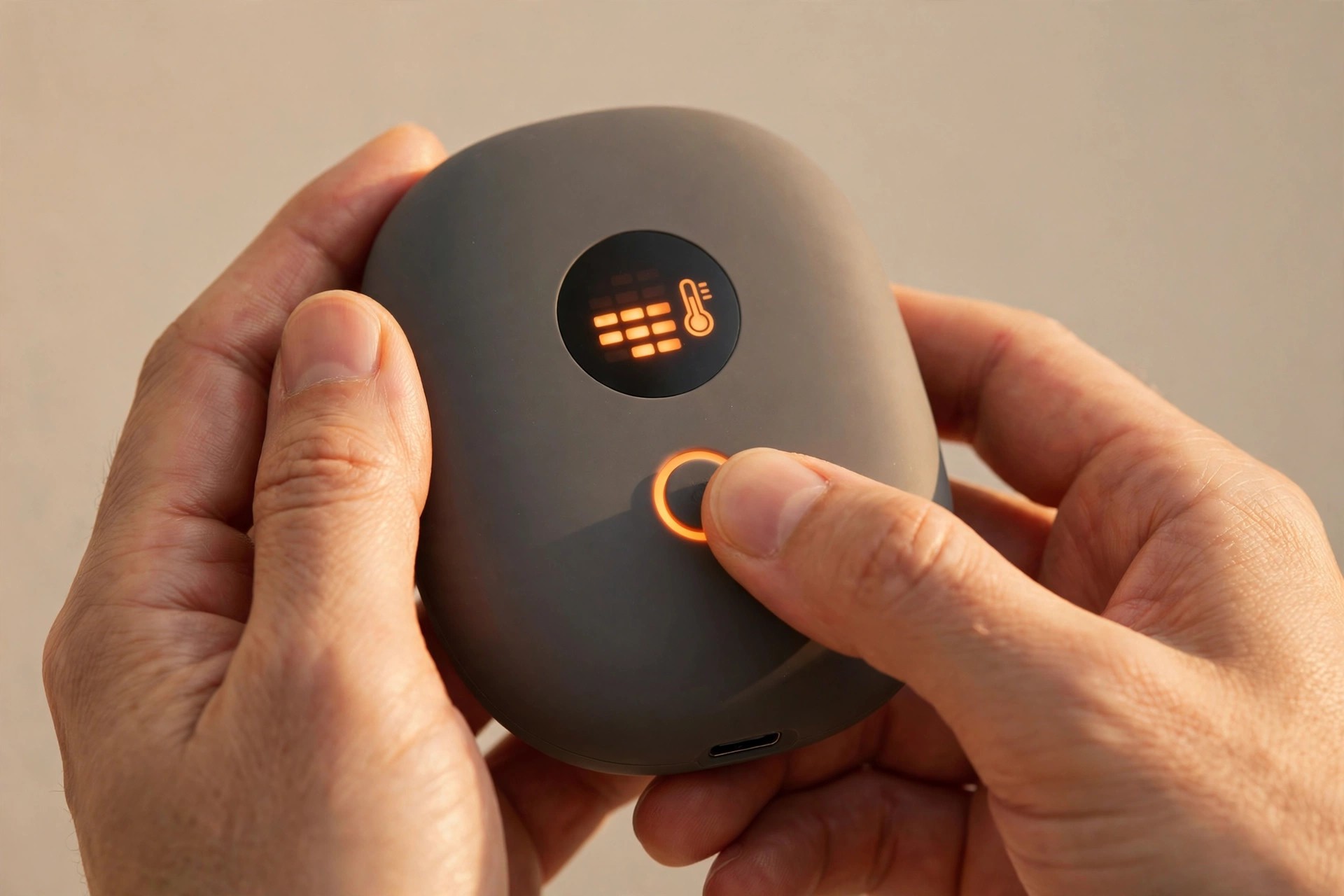
The other private-label question is the temperature display: some warmers show the temperature or remaining charge, others show nothing. A working display costs a little more, but it is the feature buyers notice first in a listing photo, and the easiest way to tell a mid-range warmer from a bottom-range one. Whatever you choose, make sure the sample you approve is the exact configuration you will receive in bulk, and get it confirmed in writing. A factory that swaps the configuration between sample and bulk is not one to reorder from. For how to vet a supplier before you commit, see our guide to choosing a reliable supplier.
5. The Christmas clock: air freight is the only lane left
If you want hand warmers on shelves for Christmas, order now and ship by air. Sea freight for the holiday season cut off around mid-November, so a bulk order placed this week will not arrive by sea before Christmas — air freight is the only lane left, and lithium batteries fly under stricter rules than ordinary cargo, which is why the UN38.3 report in section 1 matters twice over: it is both a safety document and a shipping document. Build the air-freight cost into your landed cost before you commit — on a $5 product the freight is a large share of the total, and a landed cost calculated on sea-freight rates is a fantasy.
Black Friday is November 27 and Cyber Monday is November 30, and the demand window is open right now — but only for stock that is already on its way or flying. A warmer that arrives on December 26 is a January product, not a Christmas one. The category does not end at Christmas: hand warmers sell all winter, so a well-tested product is a line you can reorder into January and February.
6. FAQ
How do I know the battery capacity is real?
Run a sample through a full charge-and-discharge cycle and time it. A genuine 4000mAh pack runs noticeably longer than a 2000mAh one at the same heat setting. Also check that the capacity printed on the pack matches the UN38.3 test report for that exact battery model.
What safety reports should I ask for?
Ask for the UN38.3 battery test report for the exact battery model, plus CE and RoHS reports. Check the report dates and the product description on them — a report for a different battery does not cover yours.
What is the minimum order?
Peer listings put the MOQ around 60 units for a dual-pack 4000mAh warmer. Custom colours, logo printing and gift-box packaging are usually cheap at 500+ units.
Start with the sample, not the bulk order
Rechargeable hand warmers reward buyers who test the battery before they talk price. Run three samples flat on the same setting, check the heat over time, get the UN38.3 report for the exact battery, and only then place the bulk order — by air, if it is for Christmas. See our Rechargeable Hand Warmer product page for a live example of this category, and pair it with our Heated Vest for a winter-warmth range. If you want help finding and vetting suppliers, our $129 Sourcing Trial covers five suppliers, a side-by-side comparison, and a recommendation — see our Pricing page for details.
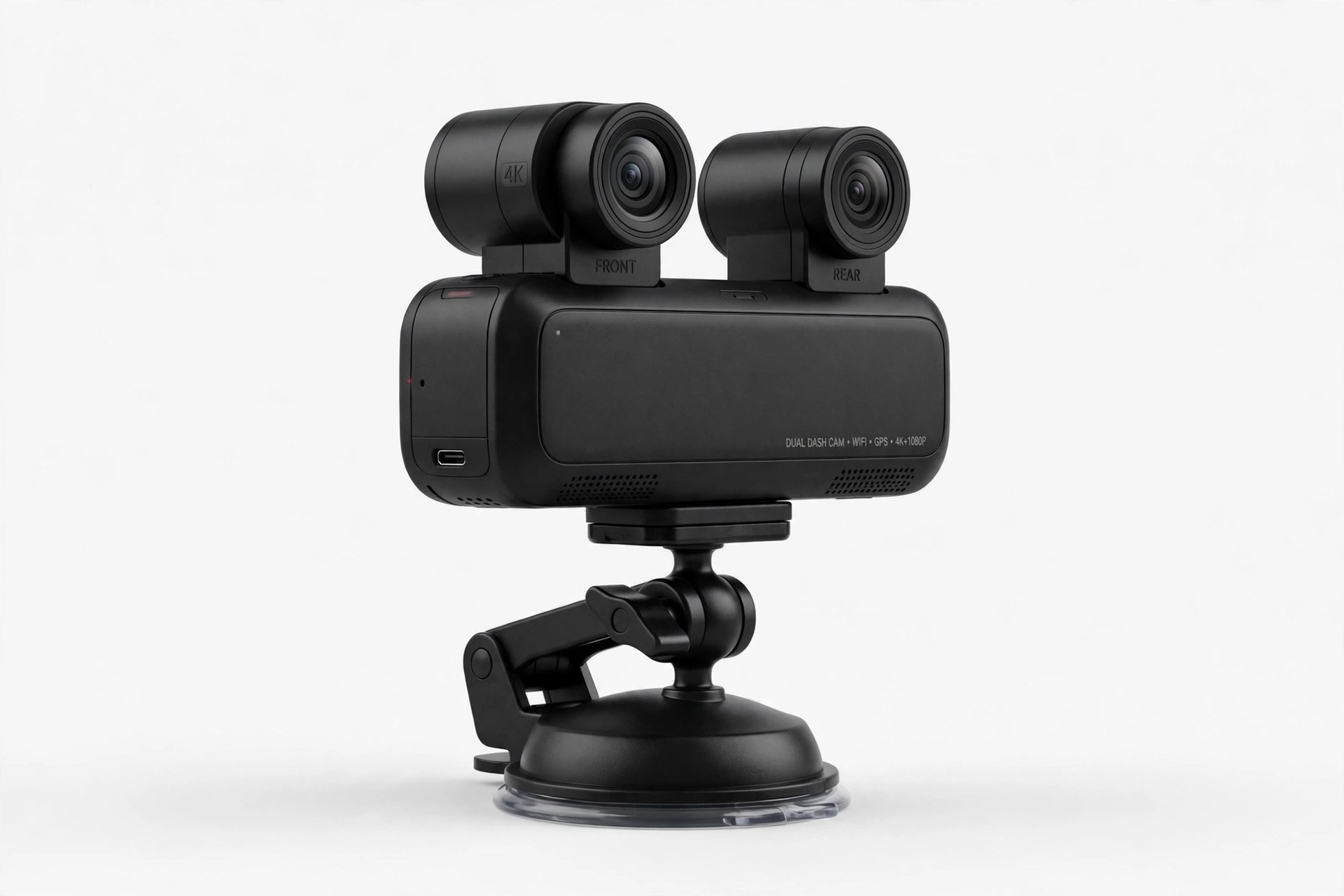
How to source dash cams from China in 2026: dual 4K front + 1080P rear, STARVIS sensor night tests, loop recording and G-sensor locks, heat and parking-mode che···
Как заказать пусковые устройства из Китая в Россию в 2026 году: реальные и заявленные пико···

How to buy from 1688 without speaking Chinese in 2026: browser translation, image search and Chinese keywords, reading price tiers and supplier badges, landed c···