
One-stop comprehensive solution provider
Short answer: Start with fast-moving wear parts — brake pads, oil filters, spark plugs and ABS sensors — and verify each one by OE number before you order volume. Peer listings in November 2026 put brake pads roughly at $1–$9 a set, oil filters at $0.65–$2.50, spark plugs at $0.40–$1.45 and ABS sensors at $1.80–$8.00. Ask for IATF 16949 certification and ECE R90 reports for brake parts, order samples from three suppliers, and check fitment on a real vehicle first. Sea freight for Christmas is already cut off, so this season’s orders go by air.
The world’s cars are getting older and the parts shelf is getting thinner. The global auto-parts market is worth about $3.04 trillion in 2026: the average car on the road keeps getting older, and older cars wear parts out on a schedule. Supply is under strain at the same time — a major US aftermarket group went bankrupt this year, legacy chips for sensors are still tight, and copper and aluminium prices keep rising. China is where the parts are made: it exported more than $80 billion of auto parts in 2025 and was the world’s largest vehicle exporter at 7.1 million cars.
1. Start with wear parts that move fast
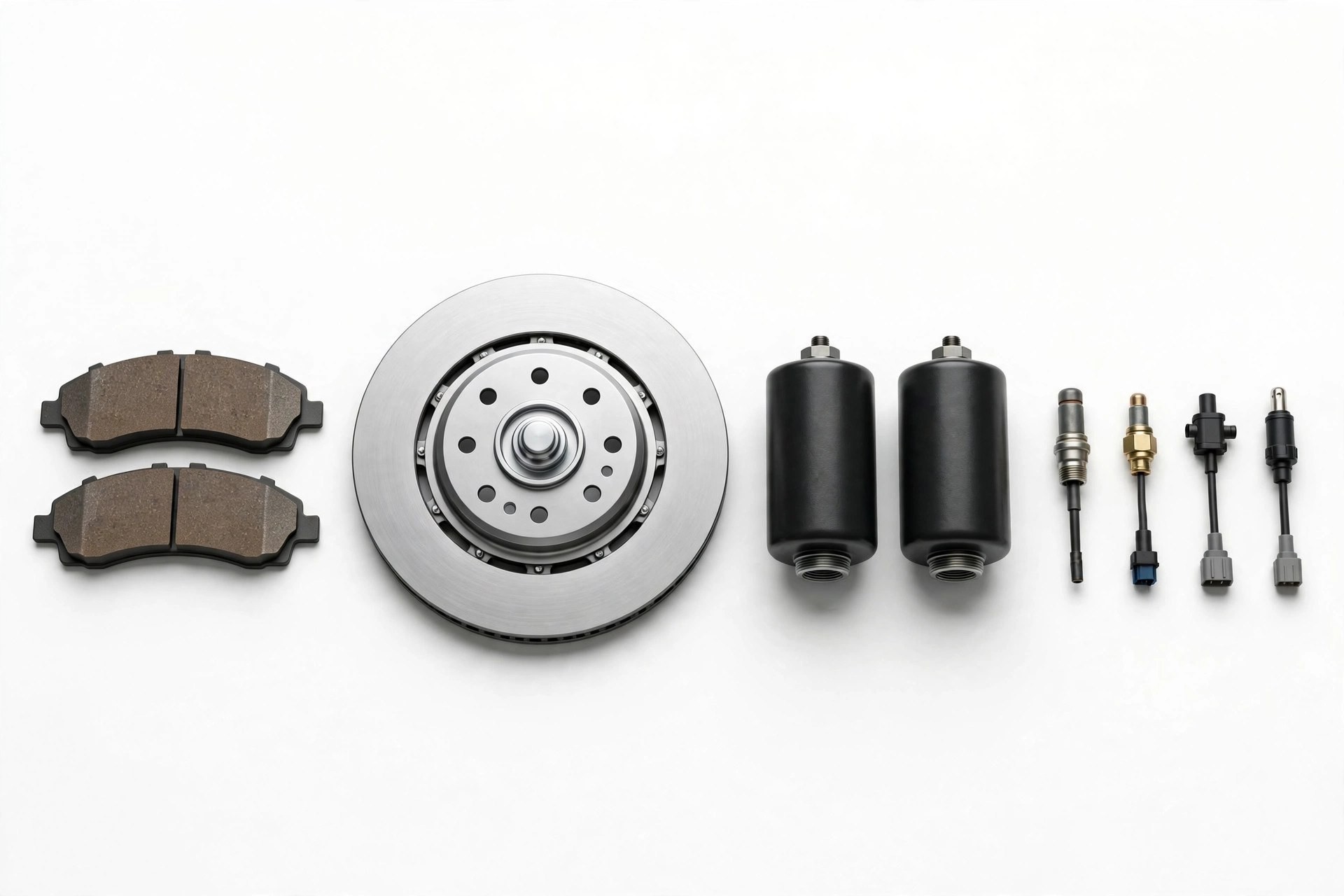
The safest first order is the wear part: the piece every car needs replaced on a schedule. Brake pads are the classic — peer listings in November 2026 put ceramic pads roughly at $1–$9 a set, mostly $2.20–$4.70 at MOQs of 50–100 sets. Oil filters run about $0.65–$2.50, spark plugs $0.40–$1.45, ABS sensors $1.80–$8.00 — mostly at MOQs of 10 or fewer — and brake discs $5–$12 at MOQs of 30–50 pieces.
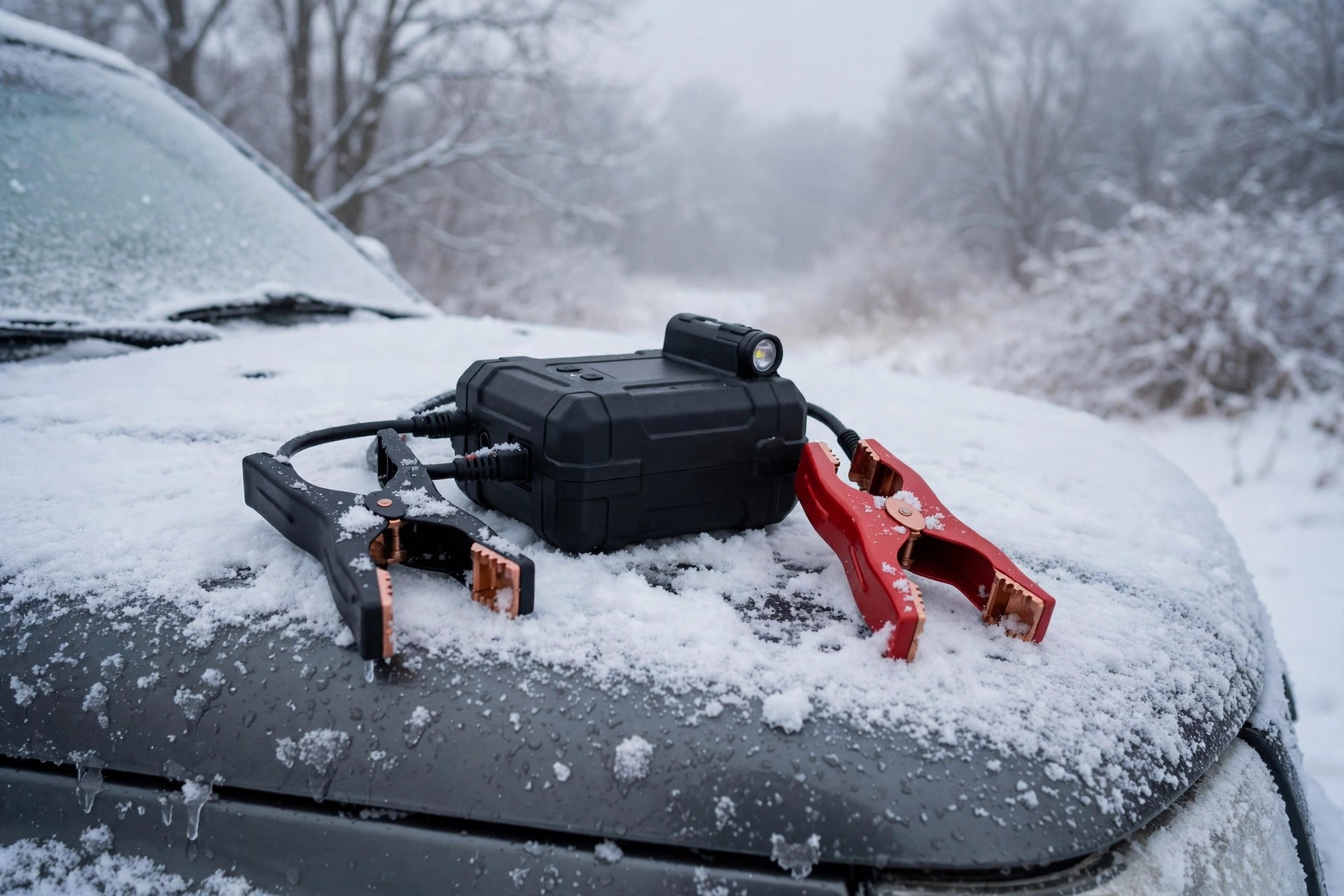
Wear parts suit a first-time buyer for three reasons. They turn over: a brake pad is a consumable, so a distributor reorders the same part number every month. Fitment is objective — a part either matches the OE number or it does not, so a wrong part is caught before it ships. And the price gap is wide enough to be a business: a brake-pad kit that retails for $37–$50 can be bought wholesale for around $2.71–$3.25 a set. Start with one vehicle family and its fastest-moving part numbers. See our Car Jump Starter product page for another auto line that sells on the same steady logic.
2. Why parts are short now — and why China is the source
The shortage is several problems stacked on top of each other. The global vehicle fleet keeps ageing, so more cars need replacement parts every year. Then the supply side took hits: First Brands Group — the US company behind Moog, Champion, FRAM, Raybestos and Cardone — filed for bankruptcy in 2026. The chip shortage has eased for high-end processors but still bites on the older ‘legacy’ chips inside window motors, airbag sensors and transmission controllers. And copper and aluminium prices stay elevated, pushing up the cost of anything with wire in it.
China is the source because that is where the manufacturing sits. Vehicle exports grew 53–65% in the first half of 2026 to more than 5 million units, while parts exports grew only about 7% to $51.3 billion — so the fleet of Chinese-brand cars abroad is growing far faster than the supply of compatible parts. That gap is the opening for a distributor.
3. Vet the supplier by OE number and certificate
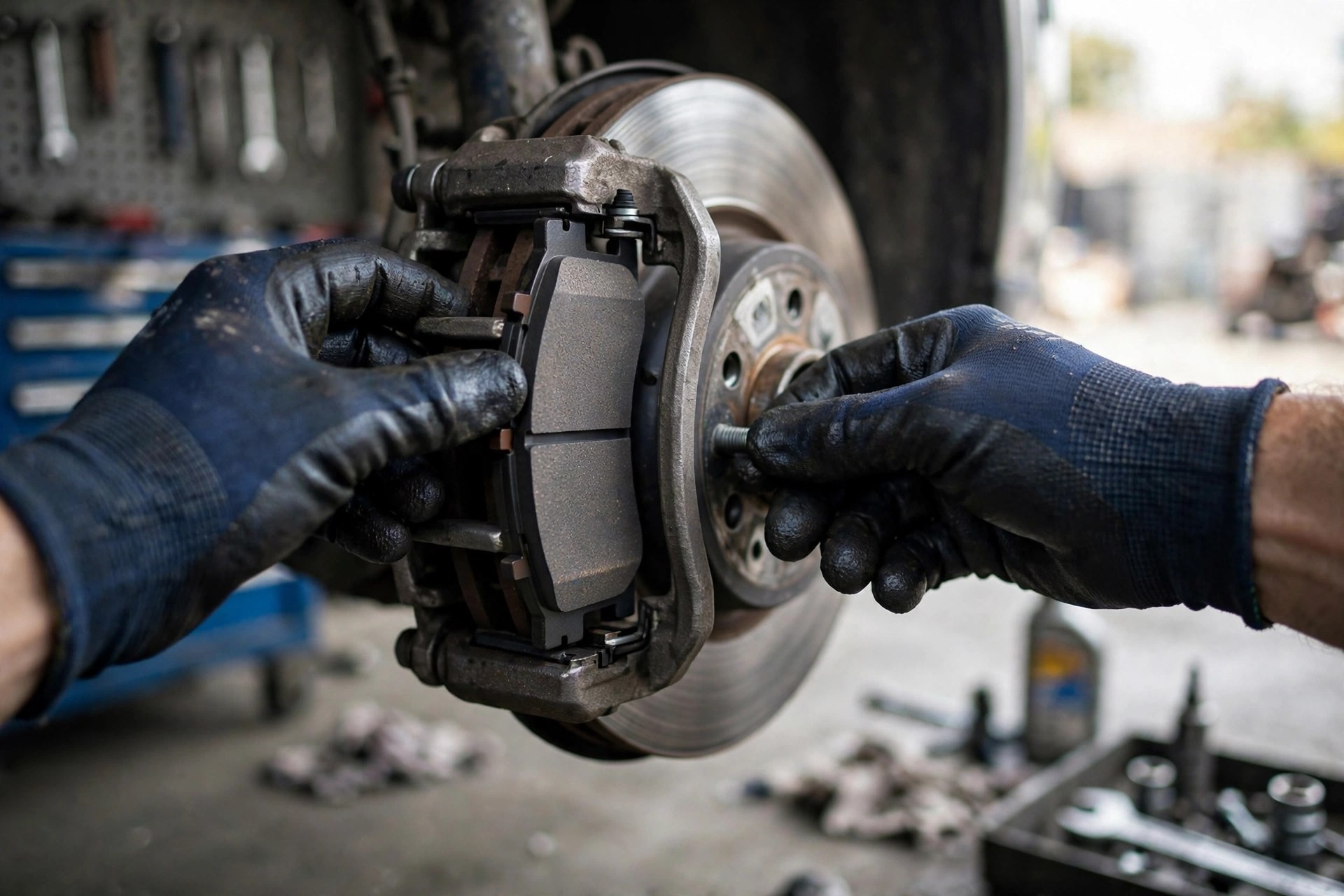
In auto parts, ‘looks right’ is worthless — the part either fits or it does not, and the only way to know is the OE number. Before you ask for a price, give the supplier the OE number from the vehicle (or the VIN) and ask them to confirm fitment in writing, with a photo of the part’s marking. A supplier that quotes without an OE number is guessing, and one that cannot produce the OE cross-reference is reselling someone else’s catalogue. Check the sample on a real vehicle: does the pad sit flat, does the connector match, does the filter thread on cleanly?
Then the certificates. Ask for IATF 16949 — the automotive quality standard — and check that it names the factory, not a trading company. For brake pads, ask for the ECE R90 test report, the European approval for replacement brake parts; a pad without it cannot legally be sold as a replacement part in the EU. Check the report dates and the product description: a report for a different part does not cover yours. The red flags are always the same: no OE number, no IATF 16949, a price far below the market range, no sample. For how to vet a supplier before you commit, see our guide to choosing a reliable supplier.
4. Price and MOQ: the ladder, and where not to chase the bottom
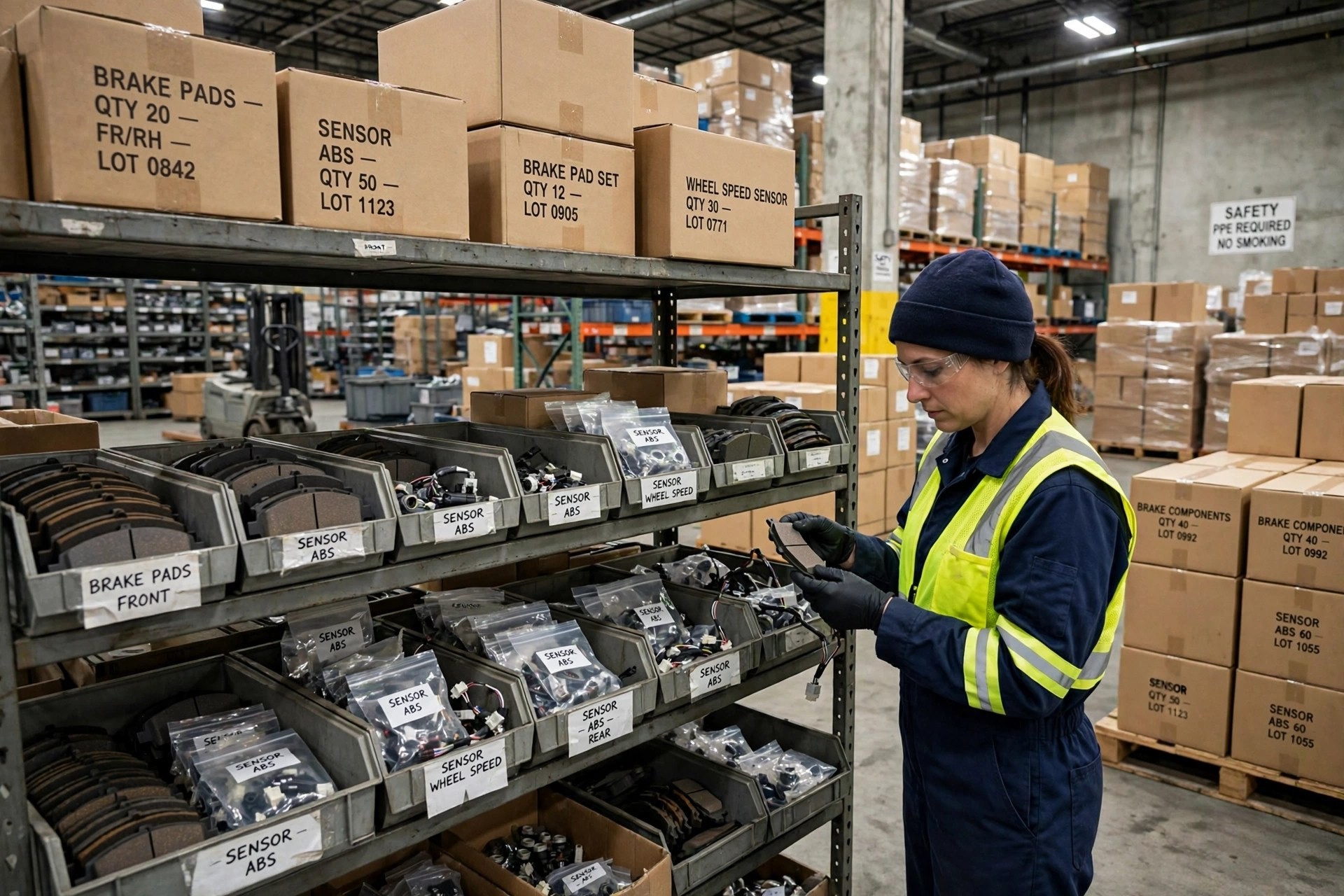
The price ladder is steep, and the cheap end is where the risk lives. At the bottom are filters and spark plugs: oil filters at $0.65–$2.50, air filters at $0.80–$1.20, spark plugs at $0.40–$1.45 — high-volume, low-margin lines, with MOQs often 100–500 pieces for the cheapest listings, though many suppliers start at 10. Brake pads sit in the middle at $1–$9 a set, MOQ 50–100 sets, and brake discs at $5–$12, MOQ 30–50 pieces. Sensors are the premium wear line: ABS sensors at $1.80–$8.00 and oxygen sensors at $2.50–$5.50, usually at MOQs of 1–10 pieces — the easiest category to test with a small first order.
Do not chase the bottom of any of these ranges. A brake pad at $0.99 a set and one at $4 a set are not the same product: the cheap one may use friction material that fades under heat, wears the disc, or squeals from day one — and a brake part that fails is not a return, it is a liability claim. Order samples from three suppliers, fit them, and buy the one whose sample is right, not the one whose quote is lowest.
5. Paperwork, shipping and the Christmas clock
Paperwork comes before payment. For brake parts, the ECE R90 report is the document that matters in Europe; for the factory, IATF 16949 is the one that matters everywhere. Ask for both, check the dates, and confirm the report covers the exact part number. A supplier that has shipped to the EU or US before will have these files ready. For the full checklist of what to verify before goods leave the factory, see our guide to pre-shipment inspection.
On shipping, the calendar is the constraint. Sea freight for Christmas cut off around mid-November, so a bulk order placed this week will not arrive by sea before the holidays — air freight is the only lane left, so build it into your landed cost before you commit. Brake pads and discs are heavy, so the freight share is real: a $3 set of pads does not stay a $3 set once it flies. The category does not end at Christmas, though — wear parts are a year-round reorder line.
6. FAQ
What auto parts should I order first from China?
Start with fast-moving wear parts: brake pads ($1–$9 a set), oil filters ($0.65–$2.50), spark plugs ($0.40–$1.45) and ABS sensors ($1.80–$8.00). They wear out on a schedule and fitment is verified by OE number.
How do I know a part will fit my customers' cars?
Give the supplier the OE number from the vehicle or the VIN and ask for written fitment confirmation with a photo of the part's marking. Then check the sample against a real vehicle before you order in bulk.
What certificates should I ask for?
IATF 16949 for the factory, and the ECE R90 test report for brake pads. Check the report dates and that it covers the exact part number — a report for a different part does not cover yours.
Start with the sample, not the bulk order
Auto parts reward buyers who verify fitment and certificates before they talk volume. Pick one vehicle family, order samples of its fastest-moving wear parts from three suppliers, check the OE number and the ECE R90 report on each sample, and only then place the bulk order — by air, if it is for Christmas. See our Car Jump Starter product page for a live example of an auto line that sells all year. If you want help finding suppliers, our $129 Sourcing Trial covers five suppliers, a comparison, and a recommendation — see our Pricing page.
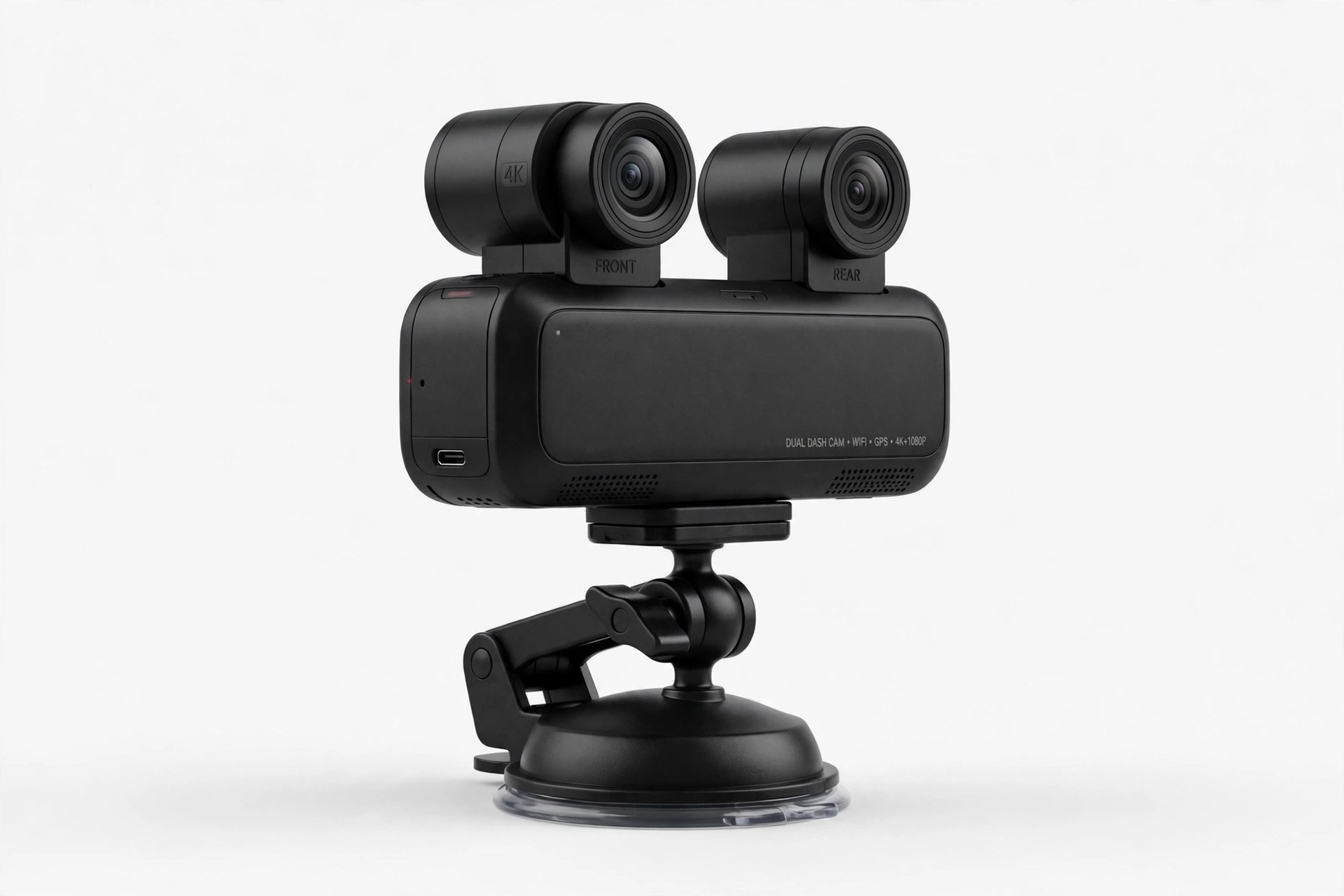
How to source dash cams from China in 2026: dual 4K front + 1080P rear, STARVIS sensor night tests, loop recording and G-sensor locks, heat and parking-mode che···
Как заказать пусковые устройства из Китая в Россию в 2026 году: реальные и заявленные пико···

How to buy from 1688 without speaking Chinese in 2026: browser translation, image search and Chinese keywords, reading price tiers and supplier badges, landed c···