One-stop comprehensive solution provider
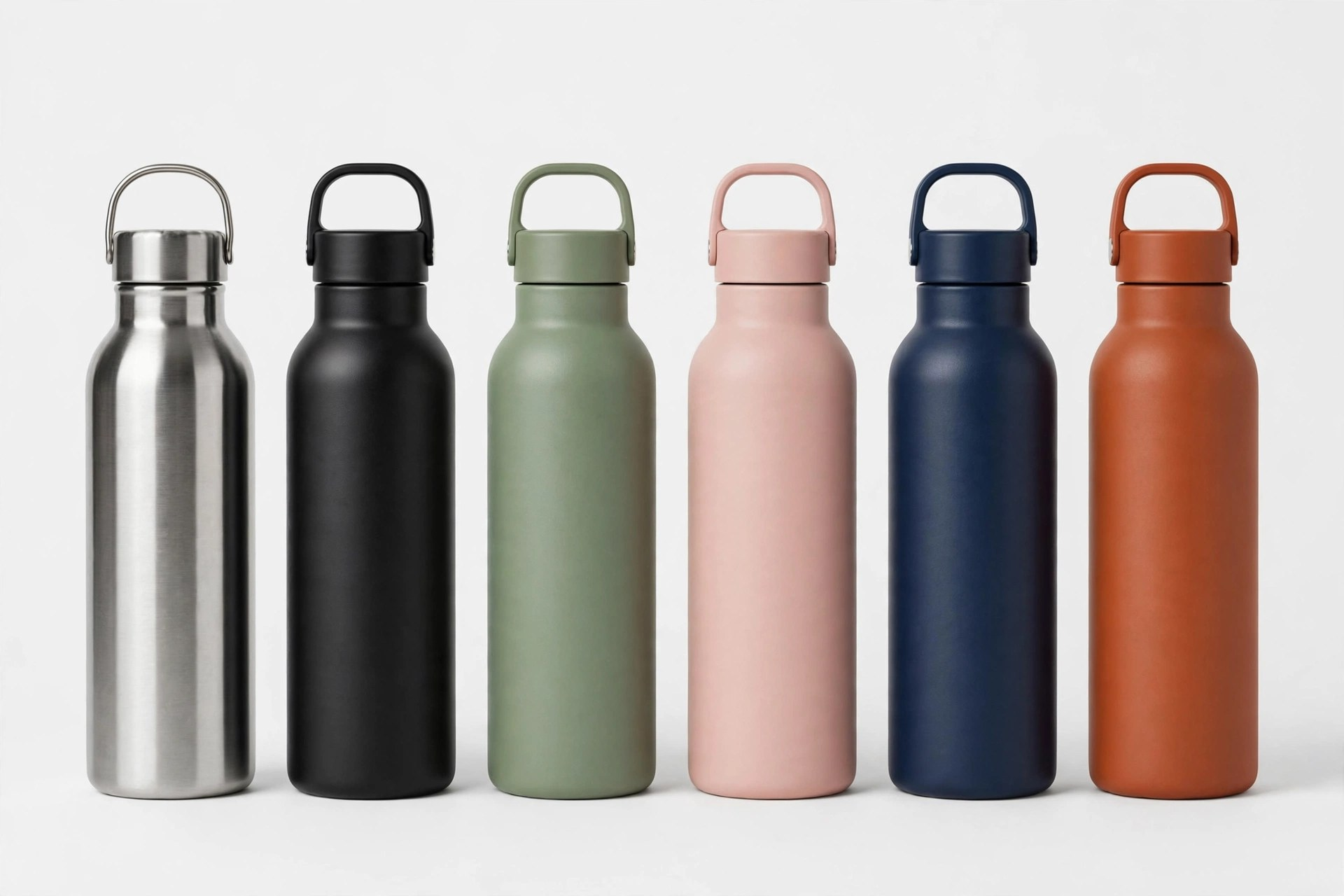
How to Source Vacuum Insulated Water Bottles from China: A 2026 Buyer's Guide
Vacuum insulated water bottles are one of the highest-volume drinkware categories sourced from China — and one of the easiest to overpay for. The product looks simple: stainless steel, double wall, vacuum. But a quote of $2.20 and a quote of $3.40 can describe nearly identical bottles, or completely different ones. The difference is knowing the benchmarks, the steel grades, and which certifications actually matter. This guide gives you all three, based on current 2026 market pricing.
What a 500ml 304 vacuum bottle should cost in 2026
For a standard 500ml double-wall vacuum bottle in 304 stainless steel, current FOB China pricing falls in these bands:
Order size Reference unit price
500 pcs $2.0–3.2
2,000 pcs $1.8–2.8
10,000 pcs $1.5–2.3
These are B2B market reference ranges at FOB China port; allow roughly ±$0.2 for FOB/EXW differences. If a quote lands far below the band — say, under $1.00 for a500ml 304 vacuum bottle — be suspicious: the inner wall is probably not 304 (201 steel passed off as 304 is a classic), the wall is too thin, or it isn't truly vacuum-insulated. Ask for the inner-wall material and wall thickness in writing before you go further.
304 vs 316 stainless steel: when the upgrade is worth it
304 is the standard for drinkware and perfectly adequate for water bottles. 316 adds molybdenum, which improves corrosion resistance — it matters for saltwater environments, acidic drinks, or brands marketing "marine grade." For plain water bottles, 316 is mostly a marketing upgrade. Expect roughly $0.5–1.0 per unit extra. Our take: pay for 316 if your customers care (outdoor or marine positioning); skip it if they don't. Either way, ask for a material test report — the price gap between 304 and 201 is exactly where dishonest suppliers make their margin.
The options that actually move the price
Most of the difference between two quotes comes from configuration, not the factory's margin:
• Straw lid, flip lid, or handle (vs standard screw cap): +$0.5–1.0
• Temperature-display lid: +$1–2
• Custom logo: laser engraving typically +$0.1–0.3; screen or UV print similar
• Gift box (vs plain white box): +$0.3–0.8 per set
• Larger capacity (750ml–1L): $3.5–5.0 per unit
Before comparing quotes, make sure you're comparing the same configuration. Half of all "why is this quote higher" confusion disappears once both sides are pricing the same lid, logo, and box.
Certifications: forget CE — ask for LFGB and FDA
Here's the mistake we see most: buyers asking for CE certification on a water bottle. CE applies to electrical and electronic products — a non-electric thermos doesn't need it. A supplier proudly showing a CE certificate for a vacuum bottle is waving a document that proves nothing about what you're buying. What actually matters is food-contact safety:
LFGB (Germany) and FDA (US) test reports
for the steel and any coating or paint that touches liquid. Selling into California? Add Prop 65. Ask for the actual test reports — not a certificate, the reports — and check that the product described on them matches what you're ordering.
Samples and lead times
Plan on 7–10 days for samples (a custom logo adds a few days), and 25–35 days for mass production after sample approval. Anyone promising mass production in 15 days is either not busy for a reason or planning to cut corners — ask about their production schedule. Sample fees of $20–50 including courier are normal; a serious factory credits or refunds the sample fee against your first order.
How to verify the factory before you pay
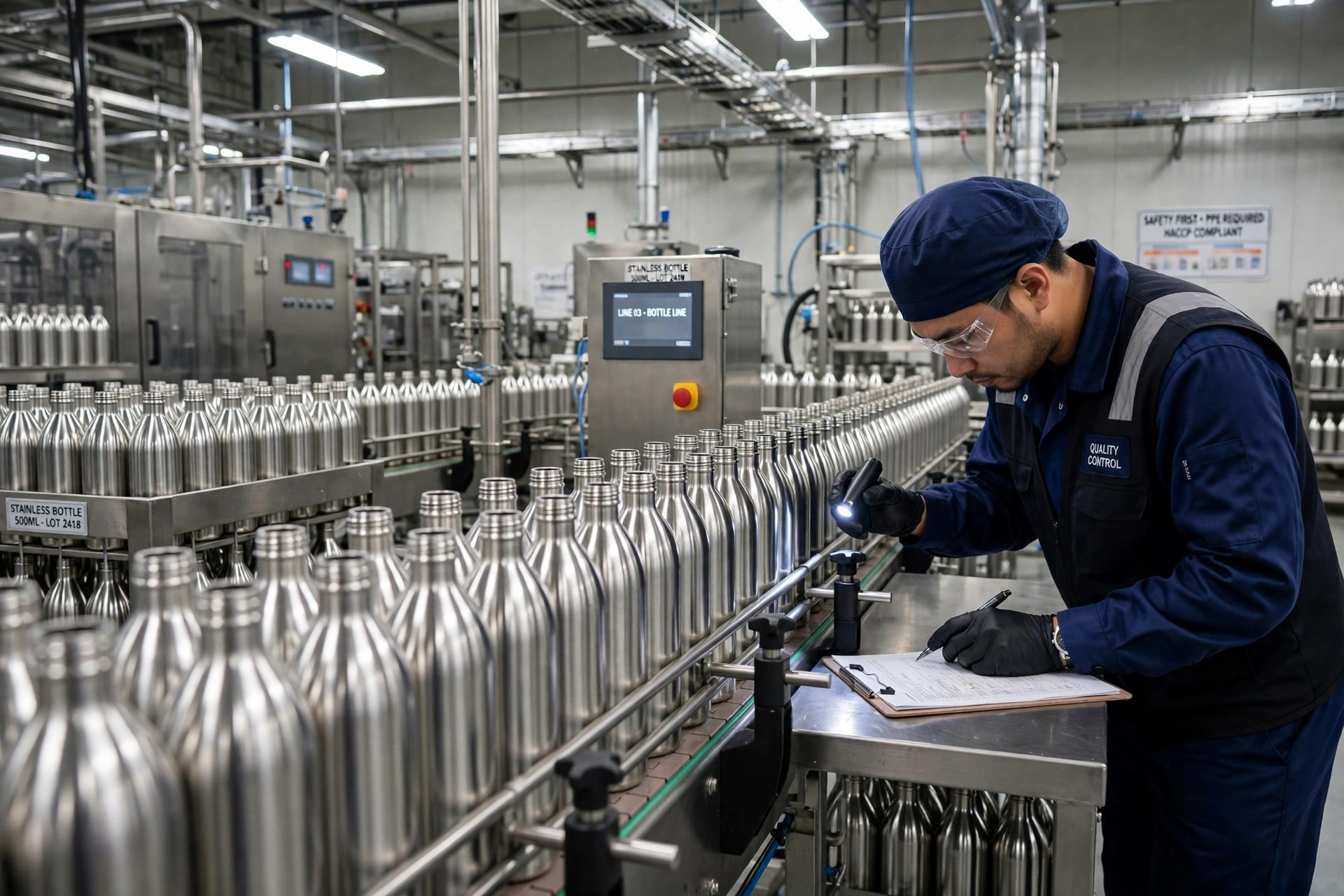
A video factory audit costs nothing and filters out most trading companies: ask for a live walkthrough of the production floor, the polishing line, and the warehouse. Then apply the one red line we never bend on: the supplier must accept third-party inspection before shipment. Any factory that refuses third-party QC is telling you everything you need to know — walk away, no matter how good the price looks. For a first order, a pre-shipment inspection (typically $150–300 per man-day) is the cheapest insurance in the entire sourcing process.
Ready to source with confidence? ChinaSift finds and vets 5 Chinese suppliers for your product, with an honest side-by-side comparison — from $129. Contact us to start your Sourcing Trial.
WhatsApp: +86 18312155383 · Email: info@chinasift.com
Backpacks look simple, which is why they are easy to buy badly. Clusters, a same-spec quote comparison, MOQs and the five QC checks for sourcing backpacks from ···
Sourcing vacuum bottles from China? 2026 price benchmarks, 304 vs 316 steel,LFGB/FDA certification guidance, and factory vetting tips for new buyers.

What does a China sourcing agent actually do? How they charge, how to spot hiddenkickbacks, and our 3-step process — with transparent pricing.